
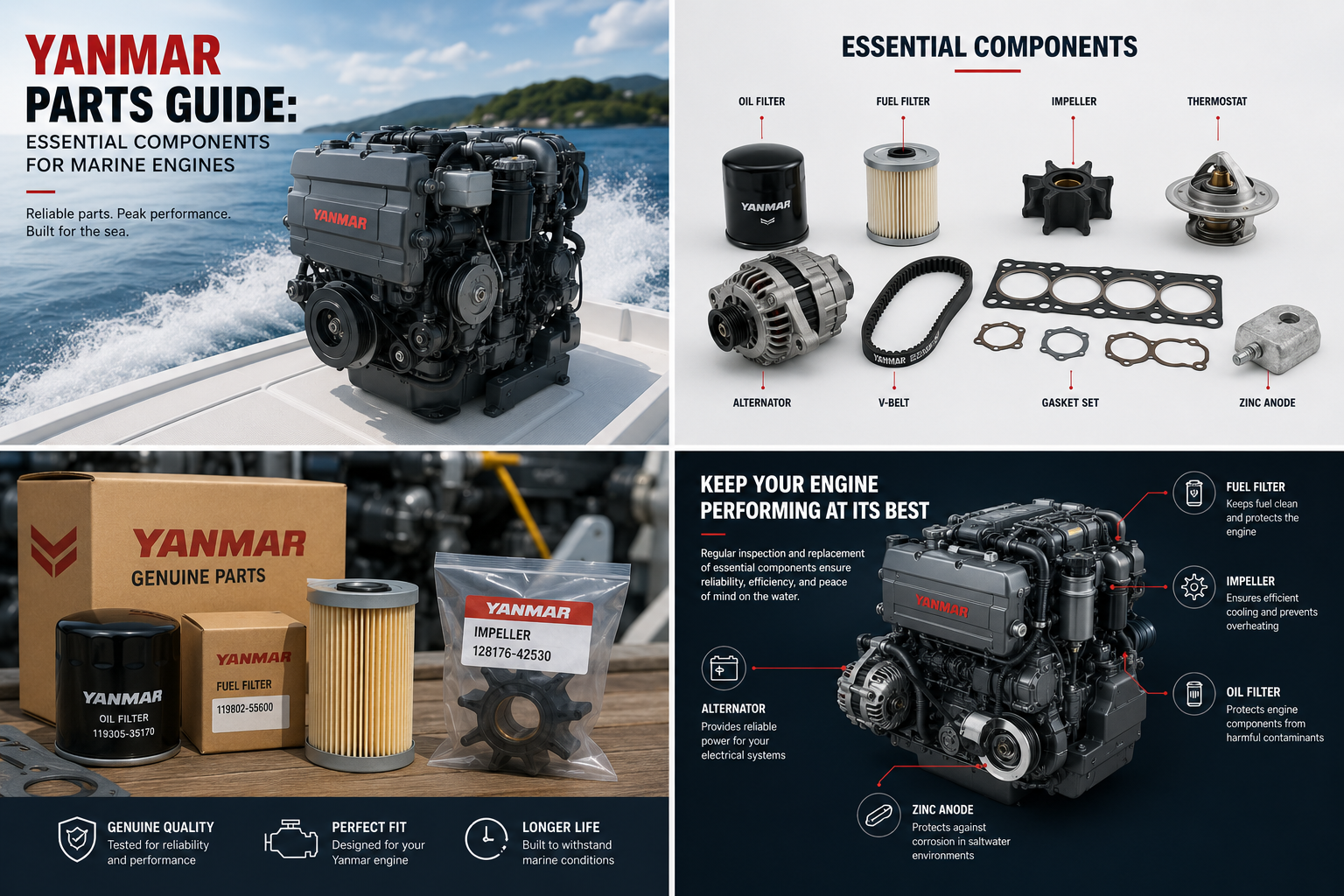
Anyone can sell marine engine parts online. But very few companies actually understand what happens after those parts leave the warehouse and go into a real vessel operating offshore.
At Yanmar Marine Experts, we have worked with boat owners, captains, marine technicians, shipyards, and commercial operators sourcing parts for everything from small sailboats to high-horsepower propulsion systems. One thing becomes clear very quickly in this industry:
The difference between a reliable engine and a costly breakdown usually comes down to maintenance quality and using the correct parts.
We have seen vessels complete thousands of trouble-free operating hours with proper servicing. We have also seen engines suffer catastrophic overheating because an incorrect impeller or low-quality aftermarket cooling component was installed during a rushed repair.
That is why understanding genuine Yanmar Parts guide matters.
Whether you operate a cruising sailboat, sportfishing yacht, commercial vessel, or long-range trawler powered by Yanmar Marine Engines, your engine depends on hundreds of components working together under constant vibration, heat, saltwater exposure, and sustained engine load.
This guide explains:
Most importantly, this guide is written from the perspective of real-world marine engine support, not generic automotive advice copied into the marine industry.
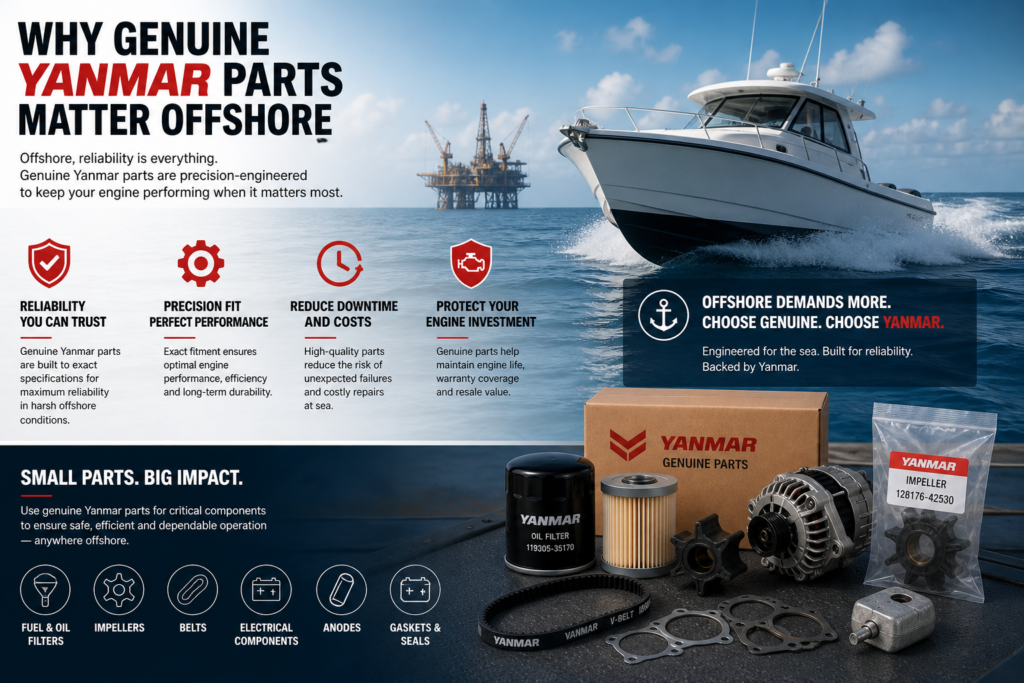
A marine engine operates in one of the harshest environments possible.
Saltwater corrosion.
Continuous vibration.
Humidity.
Long operating hours.
Heavy engine loads.
Restricted engine room airflow.
This is why marine propulsion systems require components specifically engineered for marine use.
We often speak with customers who initially tried lower-cost aftermarket parts because they appeared visually similar to genuine Yanmar components.
Sometimes those parts work temporarily.
Sometimes they fail much sooner than expected.
One customer operating a twin-engine cruising yacht contacted us after repeatedly fighting overheating issues during extended coastal passages. The vessel parts had already gone through multiple thermostat replacements and cooling system inspections.
The problem turned out to be a non-genuine impeller with slightly incorrect vane dimensions. At idle RPM, the cooling system appeared normal. Under sustained cruising load, reduced water flow caused temperature spikes.
Once the correct genuine impeller was installed, operating temperatures stabilized immediately.
Situations like this are common in marine propulsion.
A small variation in tolerances can create major reliability problems offshore.
That is why professional operators often insist on genuine yanmar diesel engine components for:
The cost of a failed marine component is rarely just the part itself.
The real cost usually includes:
A modern yanmar marine diesel engine combines multiple systems working together simultaneously.
When one system begins failing, it often creates stress on surrounding components.
Understanding these systems helps owners recognize problems earlier and reduce long-term repair costs.
Lubrication is the foundation of engine longevity.
Clean oil protects:
Oil filters remove contaminants generated during combustion and engine wear.
We strongly recommend following proper oil service intervals, especially for commercial vessels or engines operating under heavy load.
One thing many newer owners underestimate is how quickly contaminated oil affects internal tolerances in modern yanmar diesel marine engines.
Especially in turbocharged and common rail engines, lubrication quality directly affects long-term reliability.
Fuel contamination remains one of the leading causes of marine engine service calls worldwide.
Water intrusion, algae growth, and contaminated marina fuel can damage:
This becomes even more critical on electronically controlled yanmar diesel motors, where injector tolerances are extremely precise.
We regularly recommend carrying:
as onboard emergency spares.
Several commercial captains we support replace fuel filters proactively before long offshore runs regardless of appearance because fuel quality can vary significantly between ports.
That preventive mindset often prevents far larger problems later.
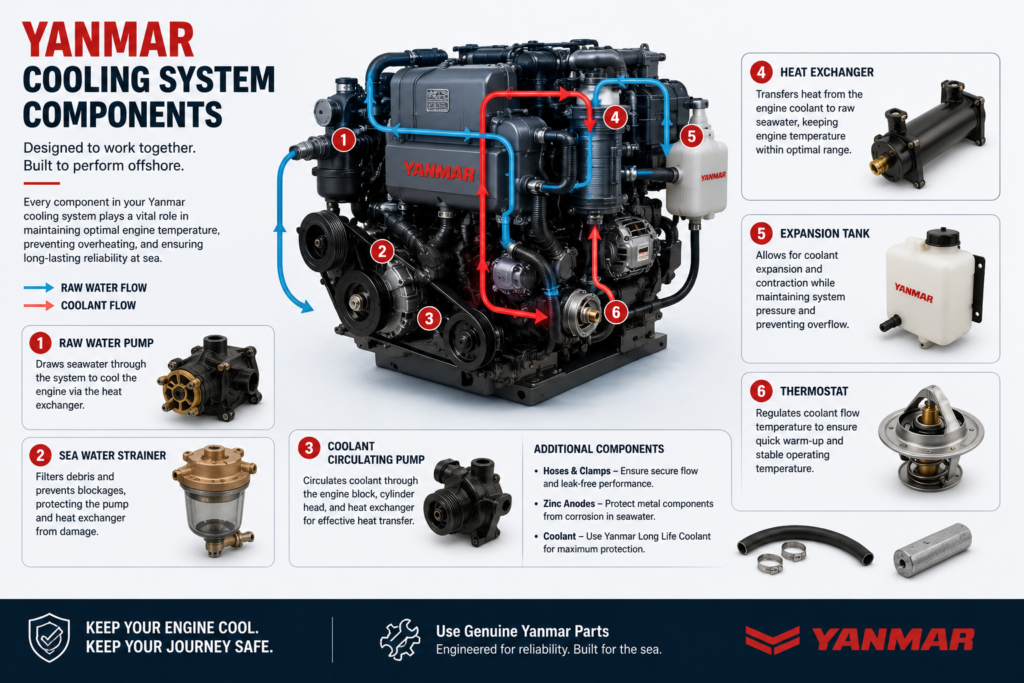
If there is one maintenance area boat owners should never ignore, it is cooling system maintenance.
Overheating remains one of the most damaging problems for any marine engine yanmar installation.
Critical cooling components include:
In saltwater environments, internal corrosion and mineral buildup slowly reduce cooling efficiency over time.
The dangerous part is that many cooling issues develop gradually.
Owners often adapt to slowly rising temperatures without realizing cooling performance has deteriorated.
We frequently advise customers to inspect:
Preventive maintenance in these systems is dramatically less expensive than repairing an overheated engine.
For vessels using Yanmar Saildrives or larger propulsion systems connected to Yanmar Gearboxes, cooling system maintenance becomes even more important because transmission temperatures can also affect overall propulsion efficiency.
Modern yanmar marine engines increasingly rely on advanced electronic management systems.
This includes:
Marine electrical environments are extremely harsh because of:
One recurring issue we see involves aftermarket sensors causing inaccurate readings or intermittent alarms because calibration differs slightly from factory specifications.
In electronically managed engines, even small electrical inconsistencies can affect:
This is why accurate parts matching matters so much.
Modern systems like the Yanmar 4LV230 Marine Diesel Engine rely heavily on properly functioning sensors and fuel management components to maintain peak efficiency and emissions compliance.
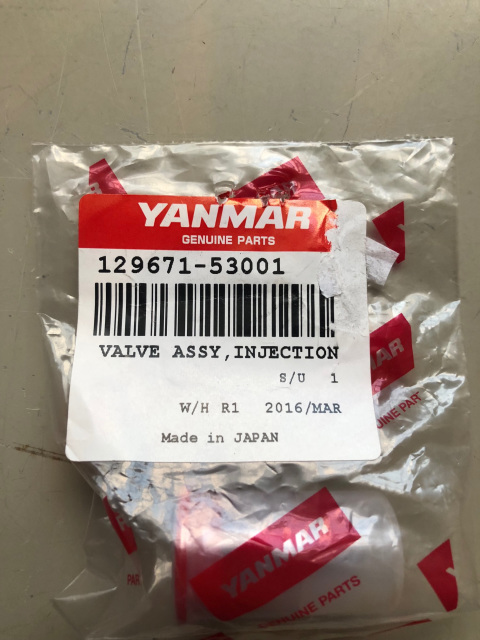
Certain parts naturally experience more wear than others.
The most commonly replaced Yanmar Parts guide include:
These are all considered normal maintenance items.
The key difference between reliable operators and reactive operators is timing.
Experienced captains replace many components before failure occurs.
Waiting for failure offshore usually costs more.
One habit we consistently notice among experienced long-range cruisers and commercial captains is preparation.
Most keep a dedicated onboard maintenance inventory including:
One commercial operator we worked with suffered a failed alternator belt during a remote offshore trip.
Because he carried proper spares onboard, the repair took less than 30 minutes.
Without that preparation, the vessel could have required external assistance.
Simple preparation often prevents major operational problems.
This is especially true for owners operating older Yanmar 6LY Marine Engines or heavily used commercial propulsion systems where preventive maintenance plays a major role in long-term reliability.
This is one of the most important points in the entire article.
Never order marine engine parts based only on appearance.
Two visually similar engines may use:
We regularly assist customers who were previously sent incorrect components because suppliers failed to verify:
At Yanmar Marine Experts, proper technical verification is part of responsible marine parts support.
Correct identification prevents:
This is especially important on engines like the Yanmar 4JH57 Marine Diesel Engine, where production variations and saildrive configurations may affect parts compatibility.
There are situations where aftermarket components can function adequately.
However, critical systems such as:
often benefit significantly from genuine factory-specification components.
Marine environments expose weaknesses quickly.
Material quality, corrosion resistance, machining tolerances, and long-term durability matter much more offshore than many owners initially realize.
Professional marine operators generally evaluate parts based on:
—not simply initial purchase price.
That mindset is one reason many commercial fleets continue to rely heavily on genuine Yanmar Marine diesel engine components.
Many customers reading our Yanmar Gearboxes Guide are often surprised to learn how strongly transmission reliability depends on overall engine maintenance and cooling efficiency.
One area where experience truly matters is supporting older engines.
Many legacy yanmar engines marine installations remain operational decades after production because owners maintained them correctly.
Older engines sometimes require:
This is where experienced marine distributors provide real value beyond simply selling parts online.
Owners considering repower projects or long-term maintenance planning should also review our Yanmar Engine and Gearbox Matching Guide to better understand propulsion compatibility and drivetrain efficiency.
Most catastrophic engine failures begin as small maintenance issues.
A restricted cooling passage.
A worn belt.
A leaking hose.
Fuel contamination.
Delayed oil changes.
Preventive servicing allows operators to identify problems early while repair costs remain manageable.
In our experience, the engines achieving the longest service life are rarely the newest engines.
They are usually the best-maintained engines.
This is one reason many operators researching How Long Do Yanmar Marine Engines Last quickly realize that maintenance quality matters far more than engine age alone.
Reliable marine propulsion comes from consistency.
Consistent maintenance.
Consistent inspections.
Consistent use of properly matched components.
That is one reason Yanmar Parts remain trusted worldwide across:
At Yanmar Marine Experts, we support customers with:
We also assist customers sourcing complete Yanmar Engines for Sale for repower projects, commercial marine applications, sportfishing vessels, and cruising yachts worldwide.
Because offshore, confidence in your engine is not optional.

Comments (4)
[…] wanting a more detailed maintenance breakdown should also read the complete Yanmar Parts Guide covering filters, cooling systems, injectors, and essential onboard spare […]
[…] wanting a more detailed maintenance breakdown should also read the complete Yanmar Parts Guide covering filters, cooling systems, injectors, and preventive maintenance […]
[…] Genuine Yanmar Parts also helps maintain cooling reliability and long-term offshore […]
[…] For a deeper understanding of preventive servicing and maintenance components, operators should review the complete Yanmar Parts Guide. […]