
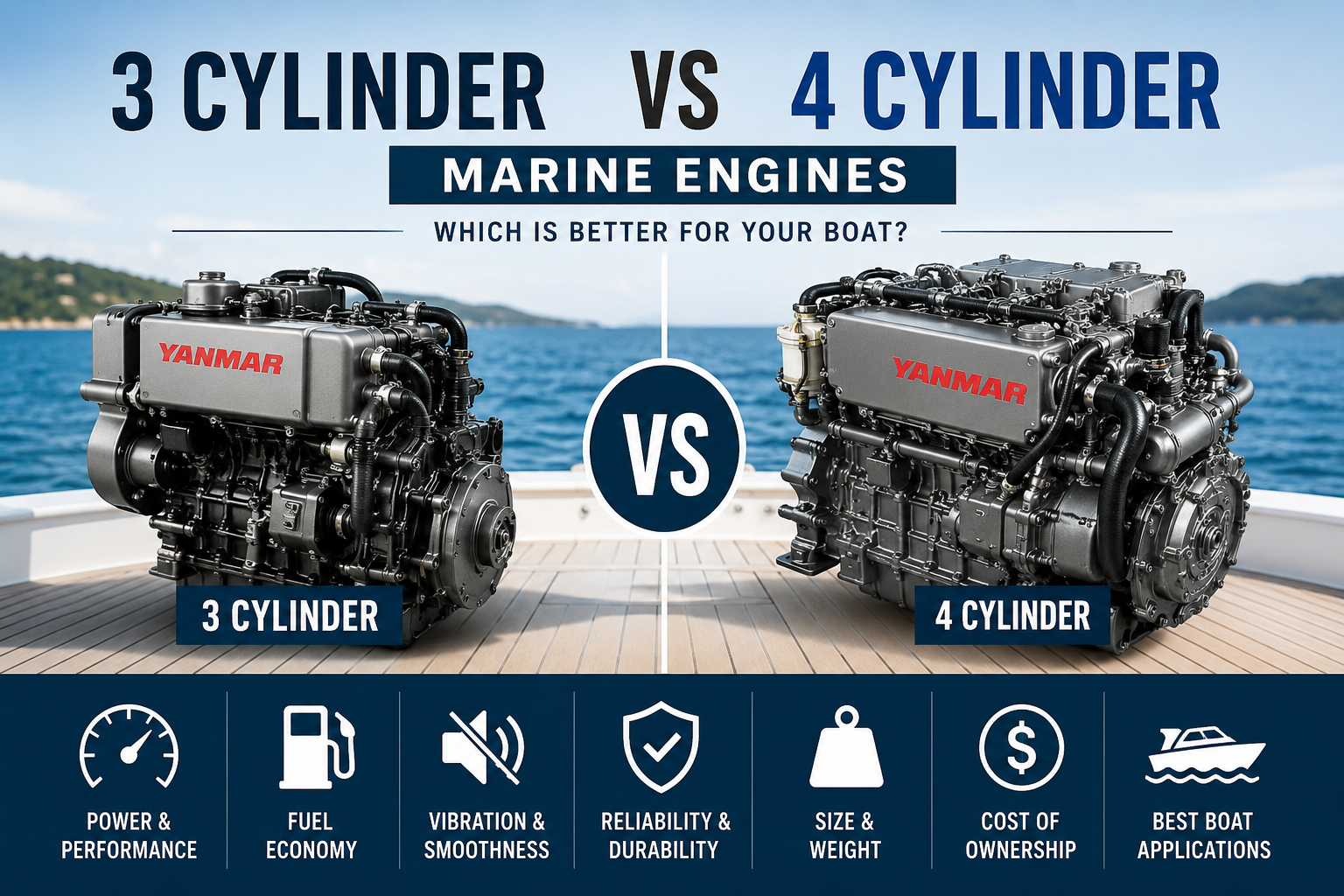
If you’ve spent any time researching marine diesel engines, you’ve probably seen the debate countless times:
“Should I buy a 3 cylinder vs 4 cylinder marine engines?”
As specialists in Yanmar Marine Diesel Engines, this is one of the most common questions we hear from boat owners planning a repower, replacing an aging engine, or buying a vessel for the first time.
The problem is that most online answers oversimplify the discussion.
Some people claim a 4-cylinder engine is always better because it produces more power. Others insist a 3-cylinder engine is the only sensible choice because it’s lighter and more economical.
After helping hundreds of customers select the right propulsion package, we’ve learned something important:
The best marine engine isn’t determined by the number of cylinders.
It’s determined by how well the engine matches the boat.
We’ve seen owners spend thousands upgrading to larger engines they didn’t need. We’ve also seen vessel owners struggle with underpowered boats because they chose an engine based entirely on price.
The truth lies somewhere in the middle.
In this guide, we’ll break down the real-world differences between 3 Cylinder Marine Engines and 4 Cylinder Marine Engines, explain where each excels, and help you make the right decision for your vessel.
Before comparing the two options, it’s important to understand what the cylinder count actually affects.
In a diesel engine, each cylinder contributes to the combustion process that produces power.
As cylinder count increases, several characteristics change:
However, more cylinders do not automatically make an engine better.
The correct engine is always the one that matches the vessel’s operating requirements.
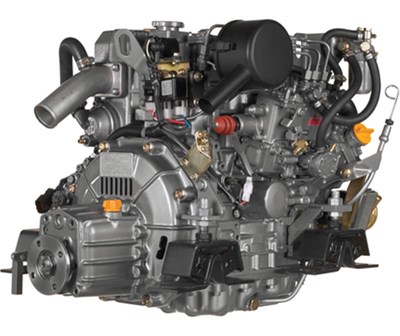
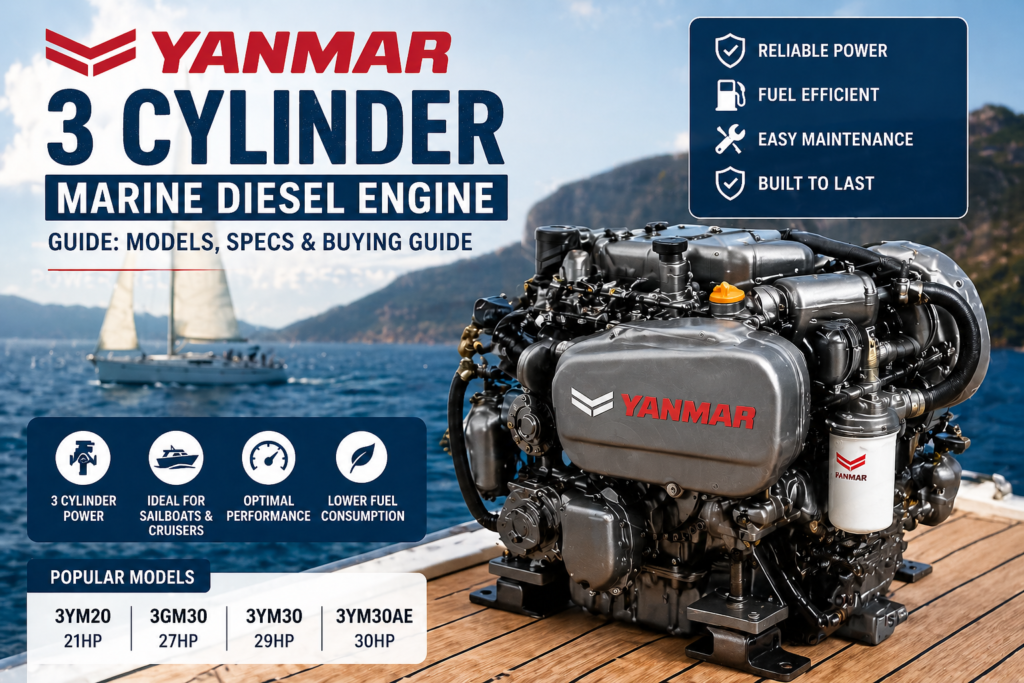
A 3 Cylinder Marine Engine uses three combustion cylinders to generate power.
Popular Yanmar examples include:
These engines are commonly found in:
One reason these engines remain so popular is that they provide excellent reliability while maintaining a compact footprint.
Many boat owners are surprised to discover that a modern Yanmar 3JH40 often provides more than enough power for vessels that rarely operate above displacement speeds.
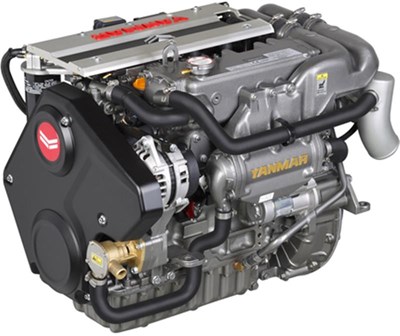
A 4 Cylinder Marine Engine uses four combustion cylinders and generally offers increased power, smoother operation, and higher torque output.
Popular Yanmar examples include:
These engines are commonly installed in:
The additional cylinder helps improve engine balance while increasing overall power potential.
One of the biggest misconceptions in the marine industry is that horsepower alone determines whether an engine is suitable.
It doesn’t.
When customers contact us regarding a Marine Engine Repower, we spend far more time discussing the boat than the engine.
That’s because factors such as:
often matter more than cylinder count.
A few years ago, we worked with the owner of a 36-foot cruising sailboat who was convinced he needed a much larger engine.
His existing engine was aging, and he assumed upgrading from a 3-cylinder engine to a larger 4-cylinder model would solve all of his problems.
After reviewing the vessel specifications, we discovered the boat rarely exceeded 7 knots and spent most of its time coastal cruising.
Instead of recommending a major upgrade, we suggested a modern Yanmar 3JH40.
The result?
Lower installation costs, fewer modifications, excellent fuel economy, and more than enough power for his cruising style.
That experience reinforced a lesson we’ve learned repeatedly:
Bigger isn’t always better.
Properly matched is better. Yanmar life expectancy
Let’s start with the reasons many sailors and cruising boat owners continue to prefer 3-cylinder engines.
One of the biggest advantages of a 3 Cylinder Marine Engine is its size.
Space is often limited in sailboats and smaller cruising vessels.
A compact engine can:
This is one reason why engines like the Yanmar 3YM30AE remain extremely popular among sailboat owners.
Weight matters more than many boat owners realize.
A lighter engine can help:
For sailing enthusiasts, reducing unnecessary weight is often a priority.
In most cases, a 3-cylinder engine costs less than a comparable 4-cylinder model.
However, the savings often extend beyond the purchase price.
Owners may also save money on:
These additional costs can significantly affect the total project budget.
Many people searching for the most economical propulsion solution ultimately choose a properly sized 3-cylinder engine.
A modern Yanmar 3YM20 or Yanmar 3JH40 can provide impressive fuel efficiency when matched correctly to the vessel.
For coastal cruisers and sailboats, fuel economy often becomes one of the strongest arguments in favor of a 3-cylinder engine.
No engine configuration is perfect.
The most noticeable drawback is vibration.
With fewer firing events occurring during operation, a 3-cylinder engine naturally produces more vibration than a comparable 4-cylinder engine.
Modern Yanmar engines minimize this significantly through advanced engineering and improved engine mounts.
However, when comparing two similarly sized engines, the 4-cylinder model will generally feel smoother.
There is a practical limit to how much horsepower can be produced efficiently from a 3-cylinder platform.
As vessel size increases, the need for greater torque and horsepower often pushes owners toward larger engine configurations.
This is particularly true for:
This is where 4-cylinder engines begin to separate themselves.
Ask experienced cruisers what they notice most after upgrading from a smaller engine.
Many will mention smoothness.
A 4 Cylinder Marine Engines generally provides:
These benefits become increasingly noticeable during long passages.
Additional cylinders allow the engine to produce more power without excessive stress.
Benefits include:
This is why many owners choose engines such as the Yanmar 4JH57 or Yanmar 4JH80 for larger cruising boats.
Boats rarely operate empty.
Most vessels carry:
A properly sized 4-cylinder engine often handles these loads more comfortably.
We’ve seen many offshore cruisers appreciate the confidence that comes with additional torque when operating in rough weather or strong currents.
Modern boats demand more electrical power than ever before.
Today’s vessels often include:
Many larger Yanmar Marine Diesel Engines can support higher-output charging systems, making them attractive for long-distance cruising applications.
One of the biggest myths in boating is that smaller engines automatically use less fuel.
The reality is more complicated.
A small engine working near maximum load can actually operate less efficiently than a larger engine running comfortably within its ideal operating range.
This is why we often tell customers:
Don’t buy the smallest engine.
Buy the right engine.
The best Marine Engine Fuel Consumption results usually come from matching the engine correctly to the vessel.
A properly selected Yanmar 3JH40 may outperform a larger engine in a sailboat.
Meanwhile, a heavily loaded cruising yacht may achieve better overall efficiency with a Yanmar 4JH57 or Yanmar 4JH80.
Cylinder count alone does not determine fuel economy.
Engine sizing, propeller selection, vessel displacement, and operating conditions all play critical roles.
This is another question we hear regularly:
“Are 3-cylinder engines more reliable than 4-cylinder engines?”
The short answer is no.
At least not automatically.
Over the years, we’ve supplied and supported countless Yanmar Marine Diesel Engines, and we’ve seen both 3-cylinder and 4-cylinder models accumulate thousands of operating hours when properly maintained.
In reality, reliability depends far more on:
than it does on the number of cylinders.
We’ve seen older Yanmar 3JH40 engines exceed 8,000 hours with proper care. We’ve also seen Yanmar 4JH57 and Yanmar 4JH80 engines deliver exceptional longevity in commercial and recreational applications. Web results
Yanmar Engine Life Expectancy? – Cruisers & Sailing Forums
If there is one advantage the 4-cylinder platform has, it’s that engine loads are distributed across more cylinders.
This often results in:
However, the difference is rarely significant enough to be the deciding factor in a purchasing decision.
The reality is that both configurations are extremely reliable when maintained according to manufacturer recommendations.
Horsepower is easy to compare on paper.
Comfort is not.
Yet comfort often becomes one of the most important factors after several years of ownership.
Each cylinder fires at specific intervals.
With more cylinders, those firing events occur more frequently and more evenly.
The result is:
This is why many long-distance cruisers prefer engines such as the Yanmar 4JH57, Yanmar 4JH80, or Yanmar 4JH110.
For a weekend sailor spending a few hours under power each month, probably not.
For someone making multi-day passages, the difference can become very noticeable.
Comfort is one of those factors that many boat owners underestimate until they experience it firsthand.
Not every vessel needs a larger engine.
In fact, many boats perform best with a properly sized 3-cylinder engine.
This is where engines such as the Yanmar 3YM20, Yanmar 3YM30AE, and Yanmar 3JH40 truly shine.
Benefits include:
This is why many owners researching the Best Yanmar Engine for Sailboats ultimately choose one of these models.
For vessels primarily operating in protected waters, a modern 3-cylinder engine often provides all the power necessary.
A Marine Engine Repower can become expensive quickly.
Choosing a properly sized 3-cylinder engine can often reduce:
while still providing excellent performance.
There are situations where the benefits of a 4-cylinder engine become difficult to ignore.
Long-distance cruisers often prioritize:
This is where models such as the Yanmar 4JH57, Yanmar 4JH80, and Yanmar 4JH110 excel.
Fishing vessels frequently carry:
The additional torque available from a 4-cylinder platform can make a meaningful difference.
This is one reason they often appear in discussions regarding the Best Yanmar Engine for Fishing Boats.
Commercial operators often prioritize:
A larger engine frequently provides operational flexibility that smaller engines cannot match.
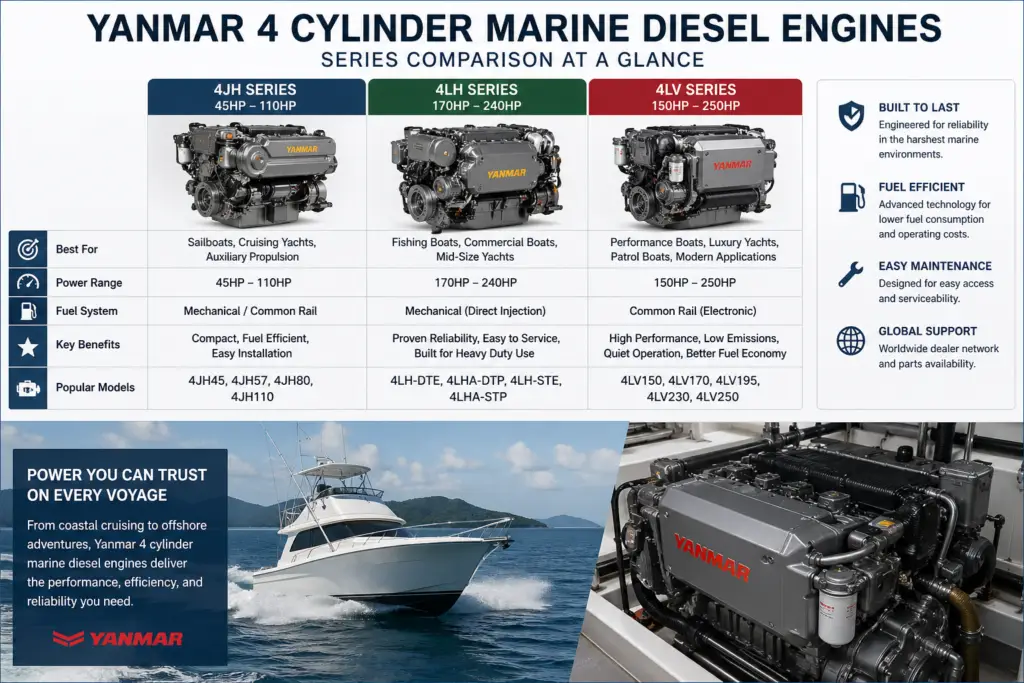
This is where many boat owners make expensive mistakes.
They assume:
“More cylinders must be better.”
Not necessarily.
A move to a 4-cylinder engine may be justified if:
Many boat owners are surprised to learn that upgrading isn’t always necessary.
You may be better off staying with a 3-cylinder engine if:
In many cases, a modern Yanmar 3JH40 can deliver everything a cruising sailor needs without the expense of a larger installation.
This is why every Yanmar Marine Engine Repower Guide should begin with an assessment of the vessel—not the engine catalog.
Let’s talk about money.
Because ultimately, every repower decision involves balancing performance against cost.
Generally speaking:
However, purchase price alone rarely tells the whole story.
A larger engine often requires:
These costs can exceed the difference in engine price itself.
Fuel consumption depends on:
not simply cylinder count.
Both engine types are relatively affordable to maintain when serviced properly.
A 4-cylinder engine may require slightly more maintenance over time because it contains additional components, but the difference is rarely dramatic.
If there’s one lesson we’ve learned from years of selling Yanmar Marine Engines, it’s this:
Don’t buy horsepower you don’t need.
Too many owners focus on engine size rather than vessel requirements.
The result?
A correctly sized engine almost always outperforms an oversized engine in terms of ownership satisfaction.
After helping boat owners with everything from simple engine replacements to complete Marine Engine Repower projects, our recommendation remains consistent.
Popular choices include:
Popular choices include:
So, who wins the battle of 3 Cylinder vs 4 Cylinder Marine Engines?
Honestly?
Neither.
The better engine is the one that’s correctly matched to your boat.
A properly selected 3 Cylinder Marine Engine can provide decades of reliable service, excellent fuel economy, and low operating costs.
A properly selected 4 Cylinder Marine Engine can deliver smoother operation, greater power reserves, improved offshore performance, and enhanced comfort.
The answer depends entirely on:
That’s why professional guidance matters.
At Yanmar Marine Experts, we help boat owners evaluate these factors every day.
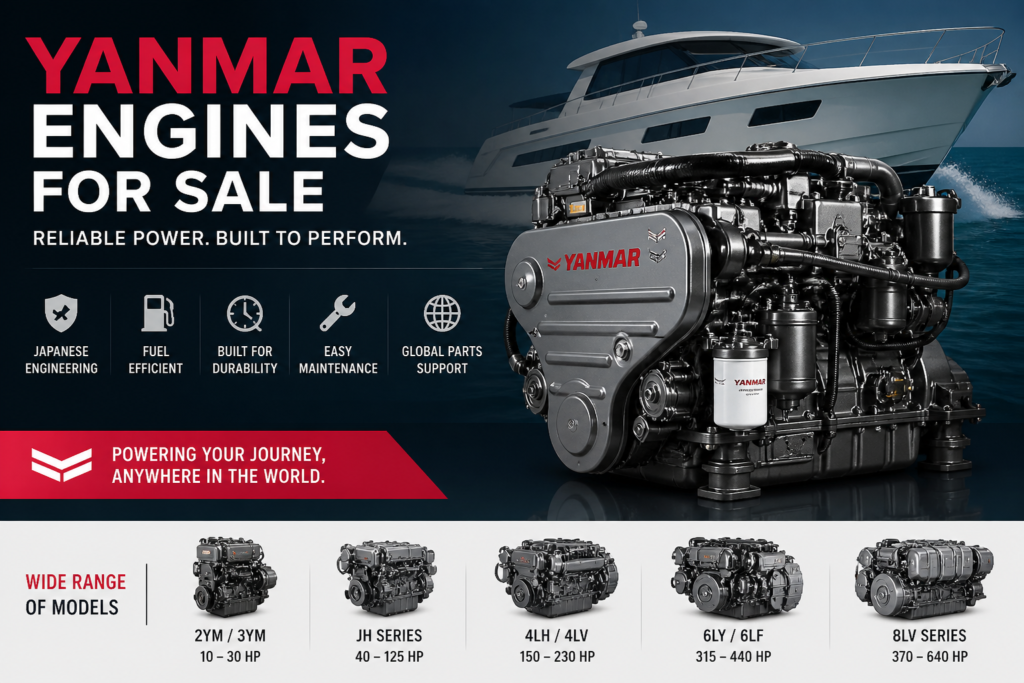
Whether you’re comparing a Yanmar 3JH40 to a Yanmar 4JH57, researching Yanmar Marine Engines for Sale, or planning a complete Marine Engine Repower, our team can help you choose the right solution.
Yes. Modern 3-cylinder Yanmar engines are highly reliable when maintained according to manufacturer guidelines.
Not necessarily. Fuel economy depends primarily on proper engine sizing, vessel characteristics, and operating conditions.
A 4-cylinder engine generally provides smoother operation and lower vibration levels.
Many smaller sailboats perform exceptionally well with a Yanmar 3JH40, while larger cruising sailboats often benefit from a Yanmar 4JH57 or Yanmar 4JH80.
Only if your vessel genuinely requires additional power, torque, comfort, or electrical capacity.
The best approach is to evaluate your vessel’s displacement, operating profile, cruising goals, and installation requirements. Working with an experienced Yanmar Marine Engine Dealer can help ensure the engine matches the boat correctly.
If you’re comparing 3 Cylinder vs 4 Cylinder Marine Engines, planning a Marine Engine Repower, or searching for Yanmar Marine Engines for Sale, our team at Yanmar Marine Experts is here to help.
We provide:
Whether you’re considering a Yanmar 3YM30AE, Yanmar 3JH40, Yanmar 4JH57, Yanmar 4JH80, or another model, Yanmar Marine Experts can help you identify the right propulsion package for your vessel and your boating goals.
