
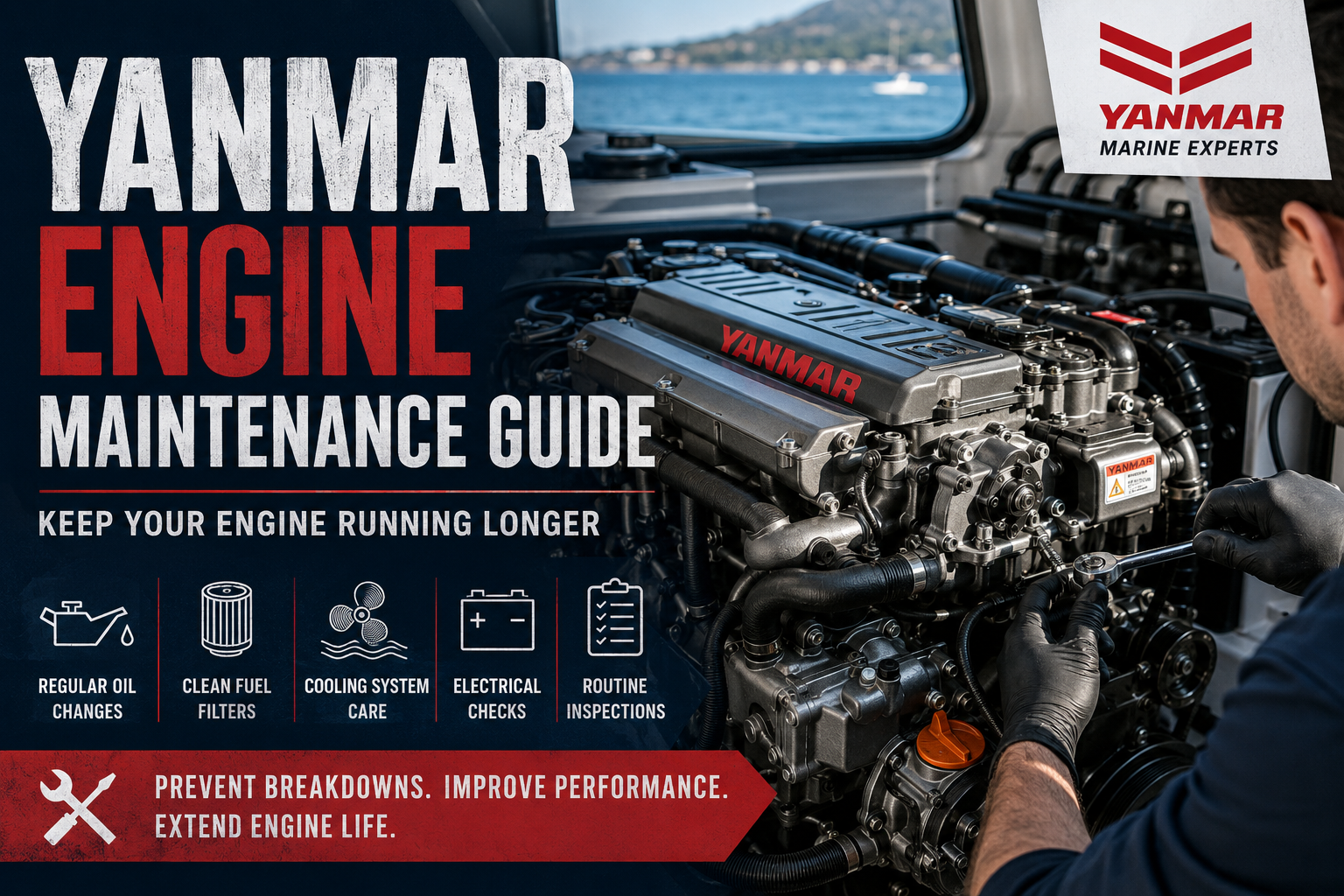
A Yanmar marine diesel engine can provide thousands of hours of dependable service—but reliability does not happen by accident.
It comes from regular inspections, correct servicing, clean fuel, proper lubrication, an efficient cooling system, and attention to small changes before they become expensive problems.
As experienced Yanmar Marine Diesel Engine Dealers, we regularly speak with boat owners who assume that a reliable engine requires very little attention. The engine starts easily, sounds normal, and shows no warning alarms, so routine servicing gets postponed.
Then something changes.
The temperature alarm sounds during a passage. The engine struggles to reach normal cruising RPM. A small fuel leak becomes more serious. An inexpensive seawater-pump impeller fails and causes an overheating problem that could have been prevented.
The lesson is simple:
Reliable engines still require maintenance.
Yanmar manufactures some of the most respected marine diesel engines used in sailboats, cruising yachts, catamarans, powerboats, fishing vessels, and commercial craft. However, even a well-engineered marine engine depends on clean oil, uncontaminated diesel fuel, unrestricted cooling-water flow, proper airflow, and routine preventive care.
Effective Yanmar engine maintenance is not only about preventing breakdowns. It can also help improve:
Through our work supporting boat owners, yacht operators, commercial vessel owners, and marine professionals, we regularly encounter questions about Yanmar marine engine service intervals, replacement filters, cooling-system maintenance, fuel contamination, engine oil changes, and long-term reliability.
One lesson appears repeatedly:
Preventive maintenance is almost always less expensive than emergency repair.
This complete Yanmar Engine Maintenance Guide explains the inspections, service routines, warning signs, and practical maintenance habits that can help your marine diesel engine operate reliably for many years.
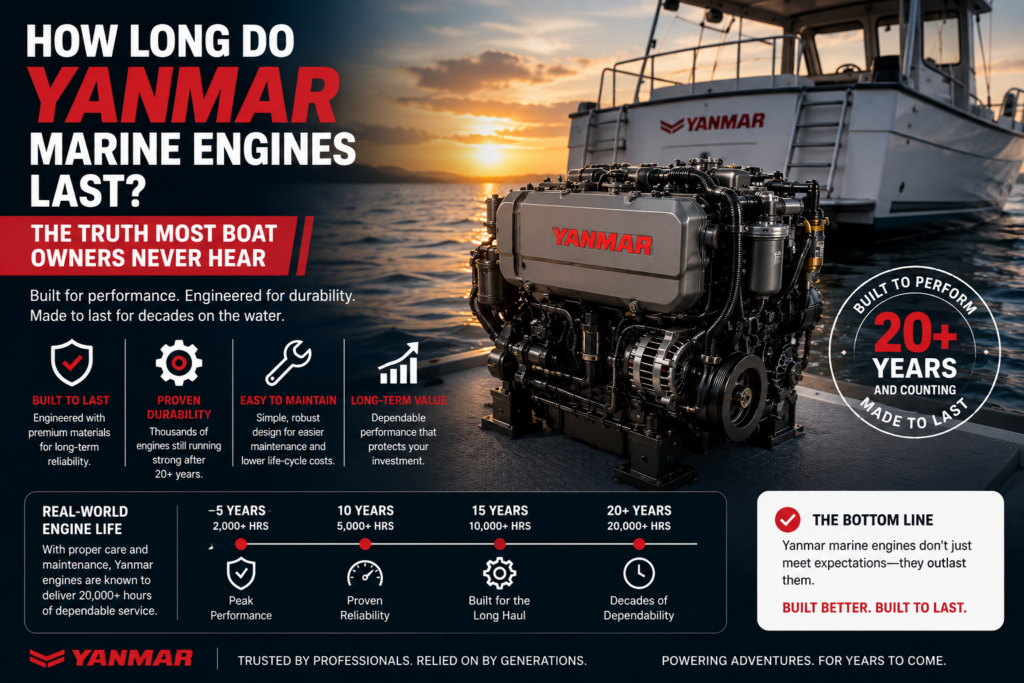
One of the most common questions boat owners ask is:
“How long does a Yanmar marine engine last?”
There is no universal number.
The operating life of a marine diesel engine depends on several factors, including:
A properly installed and carefully maintained Yanmar marine engine can provide thousands of hours of dependable operation.
However, engine hours tell only part of the story.
A high-hour engine with complete maintenance records may be in better mechanical condition than a low-hour engine that has spent years sitting unused with old oil, contaminated fuel, neglected coolant, restricted cooling passages, or inadequate corrosion protection.
This is especially important when evaluating a used engine.
Low operating hours do not automatically mean an engine is in excellent condition.
Maintenance history often tells you more.
For a detailed explanation of engine life expectancy, read our guide on How Long Do Yanmar Marine Engines Last?
Yanmar marine engines are engineered specifically for operation on the water.
Depending on the engine series and application, benefits may include:
These characteristics make Yanmar Marine Diesel Engines popular across a wide range of applications, including:
Strong engineering provides an excellent foundation, but it does not eliminate the need for servicing.
Think of preventive maintenance as protecting the engineering already built into the engine.
Many serious engine problems begin as small and relatively inexpensive maintenance issues.
A slightly loose alternator belt may not seem urgent.
A small coolant stain may be easy to ignore.
A fuel filter may continue allowing enough fuel through for the engine to run.
An aging seawater-pump impeller may continue working—until it suddenly loses blades or stops moving enough cooling water.
Marine diesel engines often provide warning signs before a major failure occurs. The challenge is recognizing those signs early.
Some of the most common maintenance-related concerns include:
Individually, many of these problems are manageable.
When ignored, they may contribute to:
This is why Yanmar preventive maintenance matters.
You are not simply servicing an engine.
You are reducing the likelihood of an avoidable failure when you need dependable propulsion most.
One pattern we repeatedly see is that expensive marine engine problems rarely begin as major failures.
They often begin with something small:
The problem develops when the warning signs are ignored.
For example, reduced seawater flow may initially cause only a small increase in operating temperature. If the cause is not corrected, the engine may eventually overheat.
A damaged impeller may also lose rubber fragments. Those fragments can travel farther into the raw-water cooling circuit and restrict downstream passages.
Replacing the impeller may solve only part of the problem.
The missing fragments should also be located and removed where practical because they may continue restricting cooling-water flow.
This is why experienced marine technicians do more than replace a failed component. They investigate the cause and inspect related systems for secondary problems.
Good Yanmar diesel engine maintenance is not simply a checklist.
It is the habit of noticing changes early and understanding what those changes may indicate.
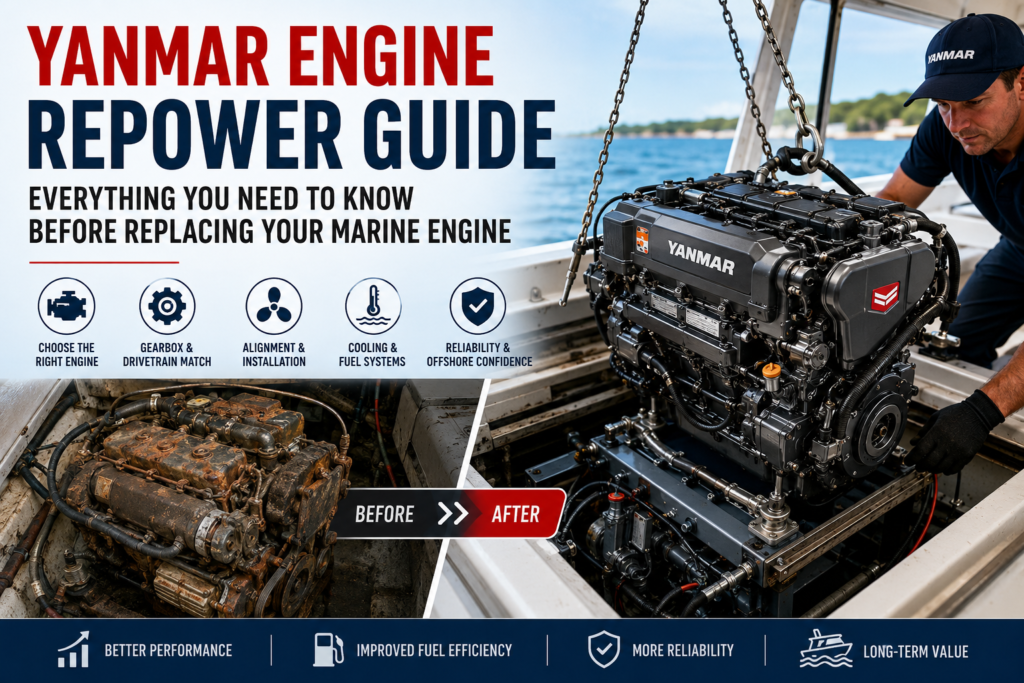
A consistent maintenance schedule helps you inspect and service important components before they fail.
The following table provides a general overview of common maintenance tasks.
| Maintenance Item | Before Each Use | Every 50–100 Hours | Every 250 Hours | Annually |
|---|---|---|---|---|
| Check engine-oil level | ✓ | |||
| Check coolant level | ✓ | |||
| Inspect for fluid leaks | ✓ | ✓ | ✓ | |
| Inspect belts and hoses | ✓ | ✓ | ✓ | |
| Change engine oil | ✓ | ✓ | ||
| Replace engine-oil filter | ✓ | ✓ | ||
| Inspect fuel filters | ✓ | ✓ | ✓ | |
| Drain fuel/water separator | ✓ | ✓ | ✓ | |
| Inspect seawater strainer | ✓ | ✓ | ✓ | |
| Inspect seawater-pump impeller | ✓ | ✓ | ||
| Inspect the cooling system | ✓ | ✓ | ||
| Inspect engine mounts | ✓ | ✓ | ||
| Check battery and electrical connections | ✓ | ✓ | ✓ |
This table is a general maintenance reference—not an official service schedule for every Yanmar engine.
Actual Yanmar engine service intervals vary according to:
A recreational sailboat engine operating occasionally may have different maintenance requirements from a commercial marine engine operating every day.
Always follow the operation manual and maintenance schedule supplied for your specific engine model.
The model-specific Yanmar manual should take priority over general maintenance advice.
Some of the most valuable marine diesel engine maintenance tasks take less than five minutes.
Before starting the engine, open the engine compartment and look around.
You do not need to be a diesel mechanic to notice:
The more familiar you become with your engine compartment, the easier it becomes to recognize changes.
Make the inspection part of your normal pre-departure routine.
Engine oil protects important internal components from:
To check the oil level:
The oil should remain within the recommended range shown on the dipstick.
Avoid overfilling.
Too much engine oil may contribute to increased crankcase pressure, oil carryover, leakage, or other operating concerns.
Also pay attention to the condition of the oil.
Warning signs may include:
Milky oil may indicate water or coolant contamination.
An increasing oil level may indicate fuel or coolant entering the lubrication system.
If you notice an unexplained change, investigate the cause before continuing normal operation. Marine Diesel Engine Maintenance Guide
The freshwater cooling circuit helps maintain a stable engine operating temperature.
Always check coolant when the engine is cool.
Inspect:
Never remove a pressure cap from a hot cooling system.
Hot coolant may be pressurized and can cause serious burns.
If the coolant level repeatedly drops, do not simply continue topping it up.
Find the cause.
Repeated coolant loss may indicate:
Treat the cause rather than only replacing the missing coolant.
Look beneath and around the engine.
Check:
Small leaks are generally easier and less expensive to correct than large ones.
A minor fuel leak can become a fire risk.
A slow seawater leak can accelerate corrosion.
A small oil leak can eventually reduce lubrication.
A coolant leak can contribute to overheating.
Never assume a leak is harmless simply because the engine continues to run.
Drive belts operate important equipment such as the alternator and, depending on the installation, other engine accessories.
Inspect belts for:
A shiny or glazed belt may be slipping.
A loose belt may reduce alternator output and create unnecessary wear.
Also inspect hoses for:
Carry spare belts and essential replacement hoses whenever practical, especially when cruising offshore or operating far from marine service facilities.
Before starting the engine:
After startup, verify that cooling water is being discharged through the exhaust system.
Reduced or absent water flow may indicate:
Never ignore reduced cooling-water discharge.
A few minutes of inspection can prevent an expensive overheating event.
If you want your Yanmar engine to run longer, regular oil and filter changes should remain among your highest maintenance priorities.
Engine oil:
Over time, oil may become affected by:
Even engines with low annual operating hours may still require scheduled oil changes because oil condition is affected by time as well as use.
The correct oil-change interval depends on:
Some Yanmar engines require an initial service following the break-in period, followed by recurring oil and filter changes at specified intervals.
Annual servicing may still be appropriate for low-hour recreational vessels.
Engines operating under demanding conditions may require more frequent maintenance.
Examples include:
Avoid applying one universal maintenance interval to every Yanmar marine engine.
Always follow the service schedule for your specific model.
Many recreational boat owners assume that low engine hours mean an oil change can be postponed indefinitely.
However, marine engines are affected by time as well as operating hours.
Moisture, condensation, repeated short operating cycles, long periods of inactivity, and incomplete engine warm-up can affect oil condition even when relatively few operating hours have accumulated.
For this reason, maintenance should be based on both:
The model-specific operation manual should always take priority over general advice.
Using the correct engine oil is essential for long-term protection.
Oil requirements may vary according to:
Use oil that meets the specifications listed in your engine’s operation manual.
Avoid selecting oil based only on brand name or viscosity.
The wrong oil may affect:
If you are uncertain about the correct oil specification, consult a qualified Yanmar dealer or marine diesel service professional.
Changing the engine oil while leaving a contaminated filter in place reduces the value of the service.
The oil filter captures contaminants circulating through the lubrication system.
When replacing the filter:
We recommend using Genuine Yanmar Engine Parts or approved-quality equivalents that meet the required filtration and fitment specifications.
Saving a small amount on an unknown filter is rarely worth the risk of inadequate filtration, poor sealing, or incorrect fitment.
Clean fuel is essential for reliable diesel-engine operation.
Fuel contamination is one of the most common causes of:
Marine fuel systems may be affected by:
Effective Yanmar marine engine maintenance must include regular fuel-system inspection.
Many marine diesel installations use:
The primary filter removes larger contaminants and separates water from the diesel fuel.
The secondary filter provides finer filtration before fuel reaches sensitive engine components.
Signs of a restricted fuel filter may include:
Replace filters according to the maintenance schedule for the engine and fuel-filtration system.
Keep spare fuel filters onboard.
Fuel-filter problems rarely occur at a convenient time.
Water does not belong in a diesel fuel system.
It may contribute to:
Inspect the fuel/water separator regularly and drain accumulated water according to the manufacturer’s instructions.
If water repeatedly appears, investigate the source.
Possible causes include:
Treat the cause—not only the symptom.
Air in the fuel system may prevent the engine from starting or cause unstable operation.
Air can enter after:
Follow the model-specific fuel-bleeding procedure.
Avoid unnecessarily opening high-pressure fuel components.
Modern common-rail systems require additional caution and specialized service procedures.
Your engine can perform only as well as the fuel supplied to it.
To reduce diesel-fuel contamination:
Fuel additives may be useful in specific situations, but they are not substitutes for proper filtration, clean tanks, or regular fuel-system maintenance.
Use only products suitable for the engine and fuel type.
Modern common-rail Yanmar engines use precisely controlled, high-pressure fuel systems.
These systems may provide:
However, their precision makes fuel cleanliness extremely important.
Water, sediment, or inadequate filtration may damage sensitive fuel-system components and lead to expensive repairs.
Never loosen or inspect high-pressure fuel lines while a common-rail engine is operating.
Fuel within these systems may be under extremely high pressure and can cause serious injury.
High-pressure pump, injector, and common-rail diagnosis should be performed using appropriate equipment and manufacturer-approved service procedures by trained technicians.
Proper fuel care is especially important for modern engines such as:
Maintaining clean fuel is one of the most effective ways to protect modern injection components and preserve long-term engine performance.
If there is one system that deserves consistent attention on a marine diesel engine, it is the cooling system.
Your Yanmar engine produces significant heat during operation. That heat must be controlled to protect internal components and maintain efficient combustion.
Unlike many land-based engines, most marine diesel installations depend partly on seawater to remove heat. This introduces additional maintenance challenges, including:
A small restriction in cooling-water flow may not cause an immediate shutdown. Instead, the engine may gradually begin operating at a higher temperature.
That is why cooling-system problems should be addressed early.
Common warning signs include:
Never ignore an overheating alarm.
Continuing to operate an overheating engine may cause serious damage to cylinder heads, gaskets, pistons, valves, and other internal components.
Many Yanmar marine engines use two connected but separate cooling circuits:
Understanding the difference makes troubleshooting easier.
The freshwater circuit circulates coolant through the engine block and cylinder head. It absorbs heat from internal engine components.
The raw-water circuit draws seawater through the seacock and seawater strainer. The seawater then passes through cooling components, including the heat exchanger, before being discharged through the exhaust system.
The two fluids normally remain separated.
The heat exchanger transfers heat from the engine coolant to the seawater without allowing the fluids to mix.
Problems in either circuit may cause overheating.
The seawater-pump impeller is a small component with an extremely important job.
Its flexible rubber blades create the pumping action that moves seawater through the raw-water cooling circuit.
Over time, impeller blades may become:
Impeller condition may be affected by:
Inspect the impeller according to the service schedule for your specific engine and operating conditions.
Replace it when required.
Keep a spare impeller and the necessary replacement tools onboard.
A spare component is useful only if you can install it safely when needed.
When inspecting an old impeller, count the blades.
If pieces are missing, do not assume they have safely left the system.
Rubber fragments may become trapped in:
These fragments may continue restricting cooling-water flow even after a new impeller is installed.
Where practical, locate and remove missing pieces before returning the engine to normal service.
This is an example of why effective Yanmar cooling-system maintenance involves more than replacing the failed part. The entire system should be considered.
The seawater strainer helps prevent debris from entering the raw-water cooling circuit.
Depending on the operating environment, it may collect:
Inspect the strainer regularly, especially when operating in shallow water or areas with heavy vegetation.
Before opening the strainer:
After cleaning:
A poorly sealed strainer may allow air into the raw-water circuit and reduce pump performance.
The heat exchanger plays a central role in controlling engine temperature.
Over time, internal passages may become affected by:
Restricted heat-exchanger passages reduce heat-transfer efficiency.
The engine may operate normally at low speed but begin overheating under heavier load.
This is an important diagnostic clue.
An engine that remains cool at idle but overheats at cruising RPM may have insufficient cooling capacity caused by restricted flow, fouled heat-transfer surfaces, pump wear, or another cooling-system problem.
Heat-exchanger inspection and cleaning should follow the engine manufacturer’s service recommendations.
More complex servicing may require a qualified marine diesel technician.
Coolant does more than control temperature.
The correct coolant also helps protect internal cooling passages from:
Use the coolant type and mixture specified for your engine model.
Avoid mixing incompatible coolant formulations.
Different coolant technologies may react with one another and reduce corrosion protection or create deposits.
If the existing coolant type is unknown, consult a qualified technician before adding a different product.
Coolant replacement intervals vary by engine model and coolant specification.
Always follow the applicable Yanmar operation or service manual.
An engine needs more than fuel.
It also requires a clean and unrestricted supply of air.
Restricted airflow can affect:
Routine Yanmar marine diesel engine maintenance should include inspection of the air-intake and exhaust systems.
Inspect the air-intake system for:
Service or replace the air filter where fitted, following the model-specific maintenance schedule.
Do not operate the engine with damaged or incorrectly installed intake components.
Unfiltered air may introduce contaminants that accelerate internal wear.
Adequate engine-room ventilation is also important.
A marine diesel engine requires sufficient airflow for combustion and heat management.
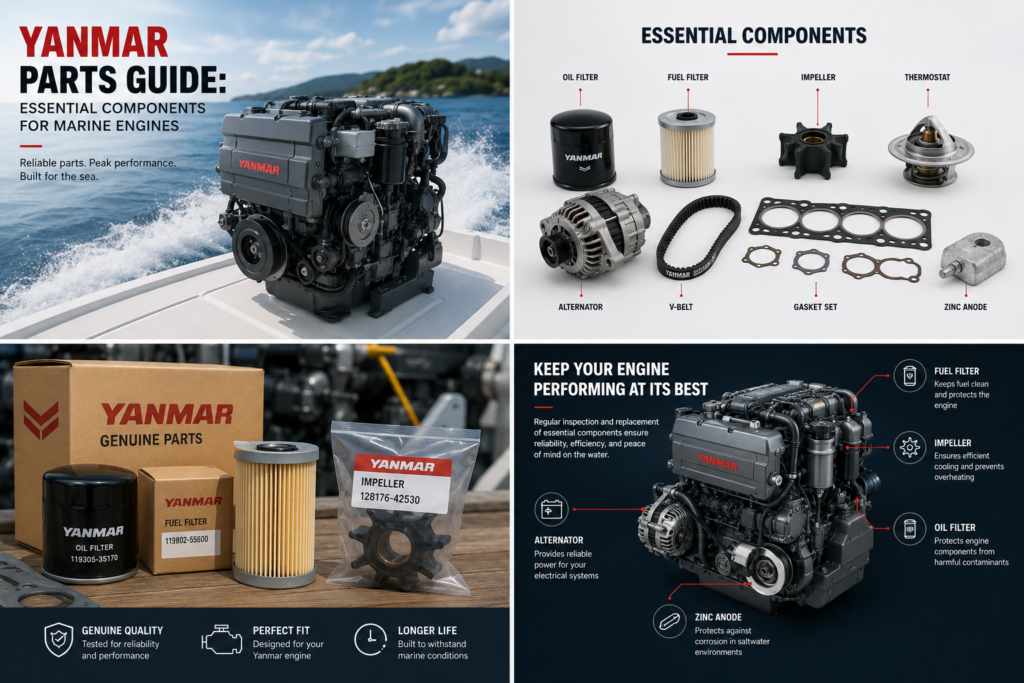
Many higher-output Yanmar marine engines use turbocharging to increase power and improve engine efficiency.
Turbochargers operate at extremely high rotational speeds and temperatures.
Good operating habits can support long-term turbocharger reliability.
Avoid applying maximum load immediately after a cold start.
Allow the engine to reach a stable operating condition before demanding high power.
After extended high-load operation, avoid shutting the engine down immediately unless an emergency requires it.
Following the operating guidance for your engine can allow temperatures to stabilize before shutdown.
Warning signs of a possible turbocharger or air-system problem may include:
These symptoms may have several possible causes, so avoid replacing components without proper diagnosis.
The exhaust mixing elbow introduces cooling water into the exhaust stream.
It operates in a demanding environment involving:
Over time, internal restriction or corrosion may develop.
Possible warning signs include:
An exhaust elbow may appear acceptable externally while being restricted internally.
Inspection intervals depend on engine model, operating conditions, materials, and service history.
If internal corrosion or restriction is suspected, professional inspection may be necessary.
Smooth engine operation depends on more than internal components.
Belts, flexible mounts, couplings, shafts, saildrives, and marine gearboxes all contribute to reliable propulsion.
A drive belt that is too loose may slip.
A belt that is excessively tight may place unnecessary load on bearings and driven components.
Inspect for:
Follow the engine manual when checking belt tension.
If the belt requires frequent adjustment, investigate the cause.
Repeated loosening may indicate:
Keep the correct spare belt onboard.
Flexible engine mounts help support the engine and reduce vibration transmitted to the vessel.
Inspect for:
Worn or damaged mounts may contribute to:
Do not assume every vibration problem comes from inside the engine.
Propellers, shafts, couplings, mounts, and alignment may also be involved.
Poor alignment may contribute to:
Alignment may change after:
A vessel’s structure may also change slightly when afloat compared with its supported position ashore.
For this reason, final alignment checks may need to be performed with the vessel in the water and settled under normal conditions.
Complex alignment work should be completed by an experienced marine technician.
The engine may receive most of the attention, but the transmission system also requires regular care.
Depending on the vessel, the propulsion system may use:
Inspect the transmission fluid according to the manufacturer’s instructions.
Check for:
Use only the specified lubricant or transmission fluid.
Do not assume that engine oil and gearbox oil are interchangeable.
Requirements vary by gearbox and saildrive model.
Owners using a Yanmar saildrive should also follow the model-specific maintenance schedule for:
For additional information, explore our guides to Yanmar Saildrives and Yanmar Marine Gearboxes.
A mechanically healthy engine still needs a reliable electrical system to start and operate correctly.
Electrical problems may cause:
Saltwater environments accelerate corrosion, making electrical inspection especially important
Check:
Loose or corroded terminals increase electrical resistance.
This may reduce starter performance and charging efficiency.
Clean and protect terminals using suitable marine electrical-maintenance practices.
Ensure the battery is securely mounted.
Check the alternator system for:
Charging problems should be investigated early.
Repeated battery discharge may not always indicate a failed battery.
Possible causes include:
Proper diagnosis prevents unnecessary component replacement.
Inspect electrical connectors for:
Keep electrical components clean and dry where practical.
Use approved corrosion protection when appropriate.
Avoid applying products that may interfere with electrical contact or damage connector materials.
Modern common-rail Yanmar engines provide excellent performance, efficient combustion, lower emissions, and responsive power delivery.
However, these advanced systems require careful fuel handling and appropriate diagnostic procedures.
Common-rail engines may include:
Important maintenance practices include:
Injector, high-pressure pump, and common-rail repairs should be handled by trained technicians using suitable equipment and approved procedures.
Even experienced boat owners can develop maintenance habits that create long-term problems.
Common mistakes include:
Low engine hours do not eliminate:
Follow both time-based and engine-hour service requirements.
Do not choose oil based only on availability or viscosity.
Follow the specification for the engine model.
Incorrect or low-quality filters may affect:
Use Genuine Yanmar Engine Parts or approved-quality equivalents.
An alarm is not an inconvenience to silence.
It is information.
Stop and investigate according to the engine manual.
Reduced cooling-water flow can quickly become an overheating problem.
If impeller blades are missing, inspect downstream cooling components.
Mixing different coolant technologies may reduce protection or create deposits.
Use the specified coolant.
Small leaks rarely repair themselves.
Find the source before the problem becomes more serious.
High-pressure fuel systems present serious safety risks.
Leave specialized diagnosis and repair to trained technicians.
Your engine often communicates through changes in sound, temperature, smoke, vibration, and performance.
Pay attention to:
These symptoms do not always identify one specific failure.
For example, black smoke may be related to:
Avoid diagnosing complex engine problems from one symptom alone.
Consider the complete operating condition and obtain professional assistance when necessary.
Long periods of inactivity can affect a marine engine even when it is not operating.
Proper storage helps reduce:
Depending on the engine model, climate, and storage conditions, preparation may include:
Cold climates require additional protection against freezing.
Follow the model-specific storage and winterization procedure.
Improper winterization can damage cooling-system components.
Before returning the engine to normal service:
Do not assume that successful startup means every system is operating correctly.
Boat owners often ask whether they must use genuine Yanmar replacement parts.
The answer depends on the component, warranty requirements, and the quality of the alternative.
Genuine parts provide confidence in:
However, not every aftermarket component is automatically unsuitable.
The important point is to use parts that meet the correct specifications and quality requirements.
Avoid unknown components selected only because they are inexpensive.
Poor fitment or inadequate filtration may create problems that cost far more than the initial savings.
For routine maintenance, explore:
Good maintenance does more than reduce breakdown risk.
It can also support efficient engine operation.
Factors that may improve fuel economy include:
A poorly maintained engine may work harder to produce the same performance.
This may increase fuel consumption and reduce cruising range.
For a detailed model-by-model discussion, read our guide to Yanmar Engine Fuel Consumption.
Maintenance can extend engine life, but it cannot reverse every form of mechanical wear.
There may come a point when continued repairs should be compared with replacement or repowering.
Warning signs may include:
The correct decision depends on:
A complete Yanmar Marine Engine Repower may provide benefits such as:
However, replacement is not automatically the correct choice.
A professional inspection can help determine whether repair, overhaul, or repowering provides the best long-term value.
Service intervals vary by model, engine hours, duty cycle, and operating conditions. Follow the operation and maintenance manual supplied for your specific engine.
Follow both the engine-hour and time-based oil-change intervals specified for the model. Low annual operating hours do not necessarily eliminate the need for regular oil changes.
Annual inspection or servicing may still be appropriate because oil, fuel, coolant, rubber components, and corrosion protection are affected by time as well as engine hours.
A properly installed and maintained engine can provide thousands of operating hours. Engine life depends on maintenance history, loading, operating conditions, and installation quality.
Important maintenance areas include:
Inspection and replacement intervals vary by engine model and operating conditions. Follow the model-specific maintenance schedule and inspect more frequently in demanding environments.
Many owners can perform routine checks and basic maintenance if they have the correct tools, knowledge, and service information. Complex fuel injection, electrical diagnosis, internal engine repairs, and high-pressure common-rail work should be handled by trained professionals.
Genuine parts provide confidence in correct fitment and specifications. Approved-quality alternatives may also be suitable when they meet the required standards. Always consider warranty requirements.
Possible causes include:
Stop the engine safely and investigate according to the operation manual.
Record:
Detailed records support future maintenance planning and may improve vessel resale value.
The best time to maintain your Yanmar engine is before a problem appears.
Regular Yanmar engine maintenance helps support:
You do not need to be a professional mechanic to protect your engine.
Learn what normal operation looks, sounds, and smells like.
Check fluid levels.
Inspect for leaks.
Watch cooling-water discharge.
Follow the correct Yanmar engine service schedule.
Keep accurate maintenance records.
Most importantly, do not ignore changes.
A small leak, unusual vibration, rising temperature, or change in exhaust smoke may be the engine’s early warning that something needs attention.
Yanmar Marine Experts provides guidance and marine propulsion support for boat owners, yacht operators, commercial vessel owners, and marine professionals.
We can assist with:
Whether you need help identifying the correct maintenance components, selecting genuine replacement parts, or choosing a new engine for your vessel, contact Yanmar Marine Experts for practical guidance and dependable support.

Comments (2)
[…] causes of Yanmar marine engine vibration […]
[…] engine should be registered according to the applicable Yanmar engine warranty […]