
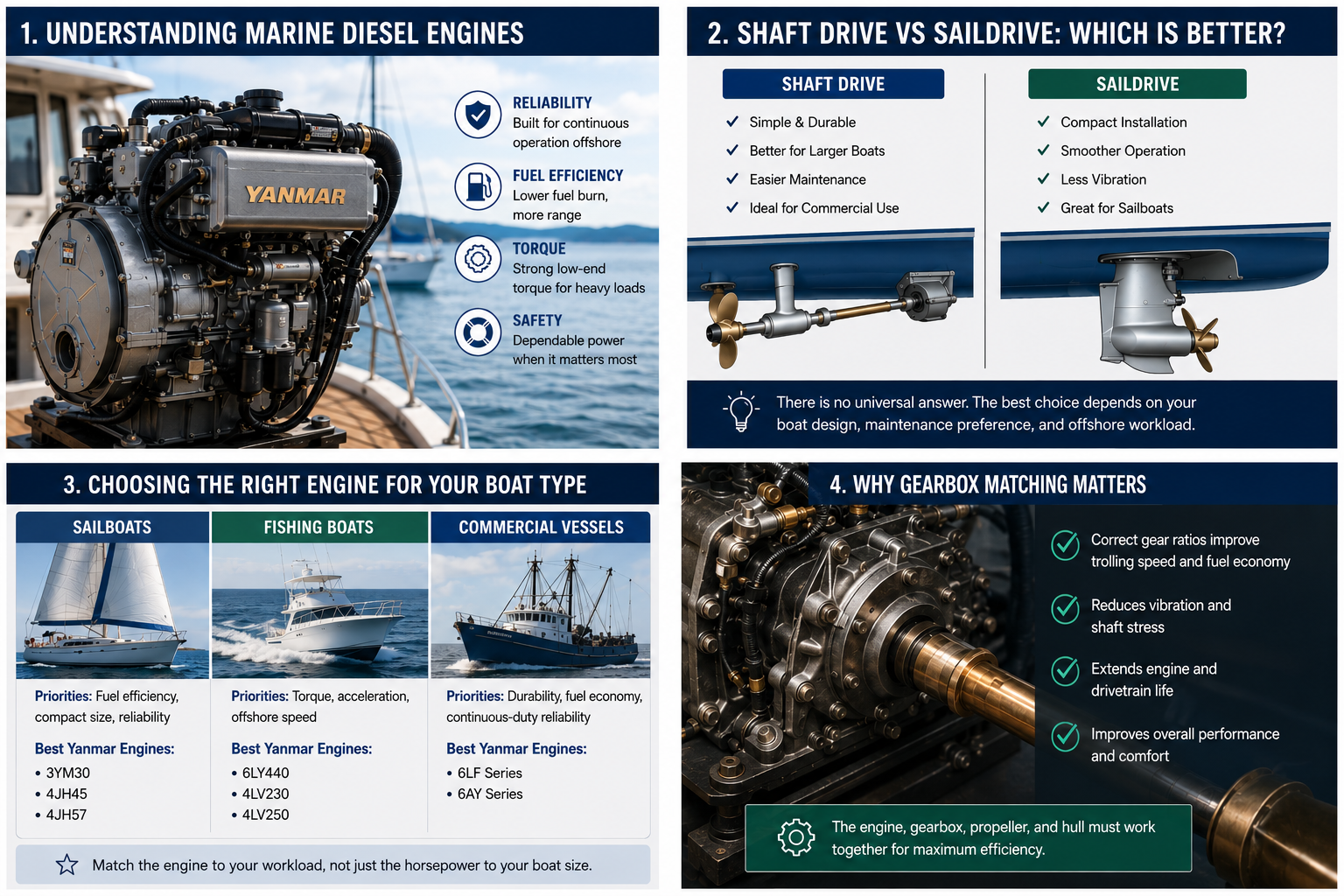
Choosing a marine diesel engine sounds eas
Until you actually start doing it.
At first, most people think:
“I just need enough horsepower.”
Then suddenly you are researching:
And somewhere in the middle of all that confusion, most buyers realize something important:
Choosing the wrong marine diesel engine can be very expensive, especially offshore, where reliability, fuel economy, and propulsion balance matter most.
Because offshore, the engine is not just another mechanical component.
It is:
At Yanmar Marine Experts, we regularly help:
choose the right Yanmar Marine Engines for real offshore conditions.
Over the years, we have assisted customers worldwide with:
across multiple vessel categories.
And honestly?
One thing becomes very clear very quickly:
The best marine diesel engine is rarely determined by horsepower alone.
We have seen improperly matched propulsion systems create serious offshore problems including:
Many of those problems could have been avoided with proper engine and gearbox planning from the beginning.
Many first-time buyers searching for how to choose a marine diesel engine quickly realize that selecting offshore propulsion is far more complex than simply comparing horsepower numbers online.
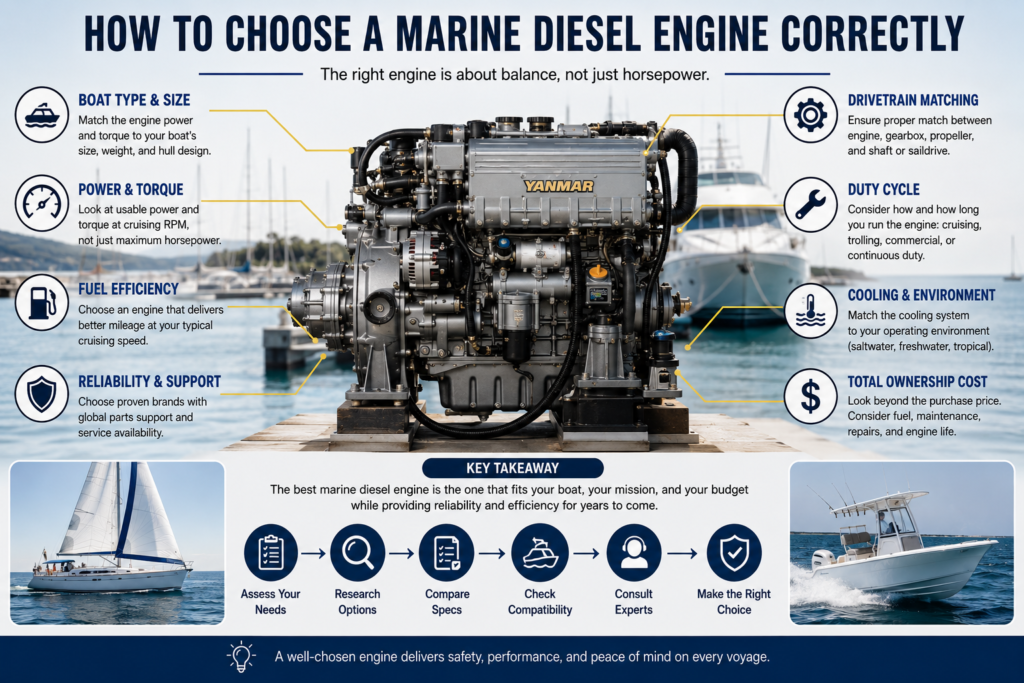
The correct marine diesel engine depends on:
This guide explains:
Most importantly, this article draws on real-world marine propulsion experience rather than generic automotive advice applied to boating.
Experienced offshore operators understand that learning how to choose a marine diesel engine properly can dramatically reduce:
There is no universal “perfect engine.”
The best marine diesel engine for one vessel may be completely wrong for another.
That is why experienced offshore buyers evaluate:
before selecting propulsion systems.
There is a reason most serious offshore boats use diesel engines.
Actually…
there are several reasons.
Offshore operators trust marine diesel engines because they are designed for:
That matters enormously offshore.
Especially when weather changes quickly.
Fuel economy offshore matters far more than many first-time buyers expect.
Especially for:
One offshore captain once told us:
“The engine that saves fuel every day eventually pays for itself.”
That statement becomes incredibly true over thousands of operating hours.
Diesel engines produce strong low-end torque.
That improves:
Especially on:
This is the part many buyers underestimate.
Reliable offshore propulsion affects:
Because offshore…
engine reliability is not just convenience.
Sometimes it is safety.
Experienced offshore captains understand that reliable propulsion is not simply about convenience — it is part of offshore safety planning.
We have seen buyers make the same mistakes repeatedly over the years.
Some of them become very expensive.
More horsepower is not always better.
Oversized engines often create:
One customer once insisted on installing an extremely large engine package into a moderate cruising hull.
The boat became:
Eventually he admitted:
“I should have listened the first time.”
That happens more than people think.
Underpowered boats create different problems.
Especially offshore.
Weak propulsion systems struggle with:
That becomes stressful very quickly.
This is one of the most overlooked parts of propulsion planning.
Improper gearbox matching creates:
Experienced propulsion specialists understand that the gearbox matters almost as much as the engine itself.
Cheap engines sometimes become the most expensive engines later.
Because offshore ownership cost includes:
That is why experienced offshore operators rarely focus only on the cheapest engine price.
Horsepower matters.
But not in the way most buyers think.
A high horsepower number means very little if:
Offshore propulsion is about:
Not simply top-end speed.
This becomes especially important for:
Strong torque improves:
That is one reason yanmar diesel marine engines remain so respected offshore.
Marine engines operate differently than automotive engines.
Cars rarely operate under heavy continuous load.
Boats often do.
Especially offshore.
That changes everything.
Experienced propulsion specialists understand that different hull designs place completely different demands on marine propulsion systems.
That is why offshore sailboats, fishing boats, catamarans, and commercial vessels should never be treated the same when selecting marine diesel engines.
Sailboats usually prioritize:
The:
remain among the most trusted marine diesel engine for sailboats platforms worldwide.
Especially the:
because of their:
Buyers researching offshore cruising propulsion should also review:
for deeper offshore propulsion guidance.
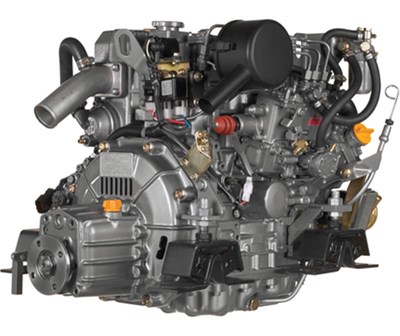
Fishing boats prioritize:
The:
are extremely popular among offshore fishing captains.
Especially:
because of their:
These remain highly respected marine diesel engine for fishing boats solutions.
Operators researching offshore sportfishing propulsion systems should also review:
for deeper offshore buying insights.
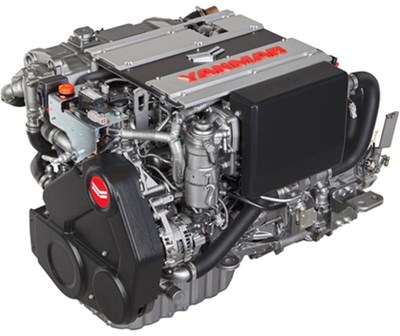
Commercial operators usually prioritize:
The:
are widely respected commercial marine diesel engines for:
Commercial operators should also review:
for long-term operational planning.
This debate never really ends.
And honestly?
Both systems can work extremely well when properly matched.
Straight shaft systems are respected for:
Commercial operators often prefer them.
Saildrives offer:
Systems like:
remain extremely popular in offshore sailboats.
Buyers comparing saildrive propulsion systems should also explore:
resources before finalizing offshore propulsion layouts.
That depends on:
There is no universal answer.
Most buyers focus heavily on engines.
Experienced propulsion specialists know:
the gearbox matters enormously too.
Many buyers researching how to choose a marine diesel engine underestimate how important gearbox matching becomes offshore. How to Choose the Right Marine Diesel Engine for Your Boat
Improper ratios affect:
The propeller, gearbox, and engine must work together properly.
When they do:
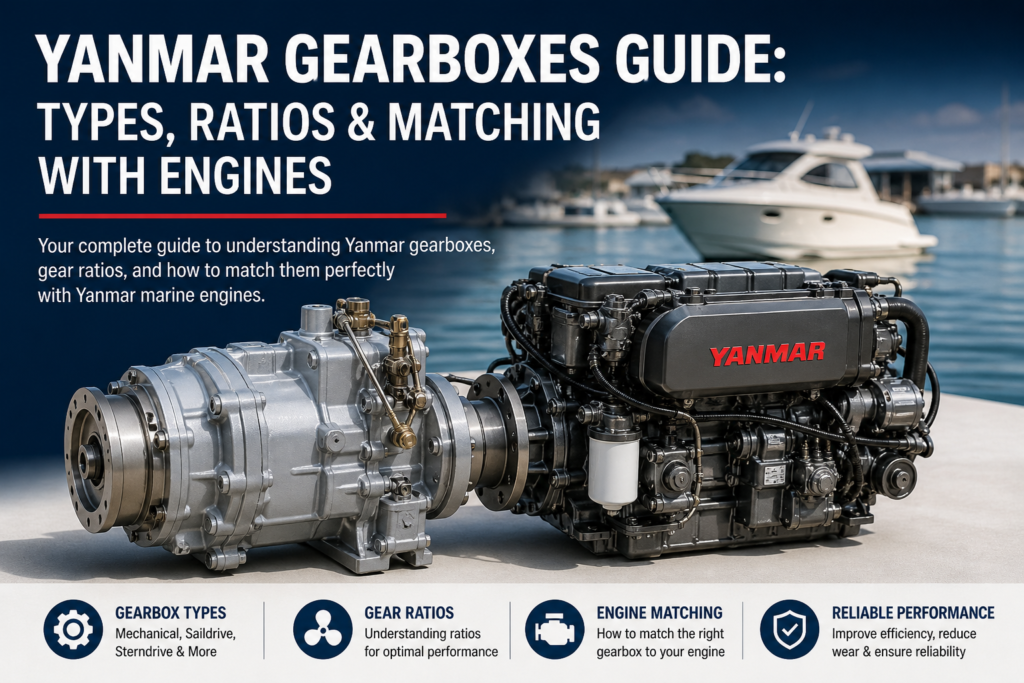
Properly matched Yanmar Gearboxes help improve:
Professional marine gearbox matching becomes especially important for:
Buyers researching propulsion balancing should also review:
for additional drivetrain planning guidance.
High-performance systems like:
are commonly used in:
For high-performance offshore applications, buyers should also explore:
before selecting propulsion layouts.
This is another question buyers ask constantly.
Modern common rail engines provide:
That is why the Yanmar 4LV Series has become increasingly popular.
Mechanical engines remain respected because they are:
Many long-range cruisers still appreciate mechanical simplicity offshore.
Fuel economy becomes one of the most important long-term factors when learning how to choose a marine diesel engine for offshore use.
Especially for:
One commercial operator once told us:
“We stopped focusing on engine price and started focusing on fuel burn.”
That mindset changes everything offshore.
Because over thousands of operating hours:
Buyers comparing offshore operating cost should also review:
before purchasing propulsion systems.
This decision depends heavily on:
New engines usually make sense for:
Because downtime offshore becomes expensive very quickly.
Used engines may work well for:
Always inspect:
Maintenance history matters far more than appearance alone.
Buyers comparing offshore propulsion investments should also explore:
before making purchasing decisions.
A properly maintained marine diesel engine can last an incredibly long time.
We regularly see:
continue operating reliably after thousands of hours.
One charter operator maintained his engines obsessively:
Those engines remained reliable long after many newer engines failed.
Experienced operators strongly prioritize genuine Yanmar Parts because:
Many serious offshore engine failures actually begin with:
Preventive maintenance plays a major role in long-term offshore engine reliability.
Operators focused on offshore longevity should also review:
for deeper maintenance guidance.
Not all marine engines are designed for the same workload.
This matters enormously.
Designed for:
Designed for:
Commercial operators must choose ratings carefully.
This may be the single most important lesson offshore operators eventually learn.
Speed is fun.
Reliability is survival.
Offshore operators eventually prioritize:
far more than maximum speed.
One offshore captain summarized it perfectly:
“The best engine is the one nobody has to think about.”
That mindset becomes common after enough offshore experience.
This is where many repower budgets fail.
Because buyers often focus only on the engine invoice itself.
Repower projects may also require:
Experienced propulsion specialists understand that properly matching:
is critical for long-term offshore reliability.
We regularly assist customers who previously experienced:
after poorly planned repower installations.
In many cases, the engine itself was not the problem — the propulsion system was simply mismatched.
This is one of the biggest reasons buyers accidentally overspend when choosing offshore propulsion systems.
Buyers planning offshore repowers should also review:
before starting installation projects.
At Yanmar Marine Experts, we assist customers worldwide with:
We also assist customers sourcing complete Yanmar Engines for Sale for:
Because offshore, choosing the correct propulsion system matters far more than simply choosing the cheapest engine online.
The correct marine diesel engine depends on:
That depends on:
Yes. Yanmar Marine Engines are widely respected worldwide for:
Both can work extremely well when properly matched to the vessel and offshore application.
Very important. Improper gearbox ratios can create:
That depends on:
Properly maintained marine diesel engines can last thousands of operating hours.
Common rail engines provide:
Preventive maintenance is critical for offshore reliability. Cooling systems, injectors, fuel filtration, oil changes, and genuine service components all directly affect engine lifespan and offshore dependability.
Yes. Yanmar Marine Experts assists customers worldwide with:
Learning how to choose a marine diesel engine correctly is not simply about horsepower.
It is about:
That is why experienced offshore operators focus on:
instead of simply chasing the cheapest engine available online.
At Yanmar Marine Experts, we help customers worldwide evaluate offshore propulsion systems based on:
We also assist with:
Because offshore, the best engine is not simply the fastest engine.
It is the engine you trust when conditions become unpredictable.

Comment (1)
[…] How to Choose a Marine Diesel Engine […]