
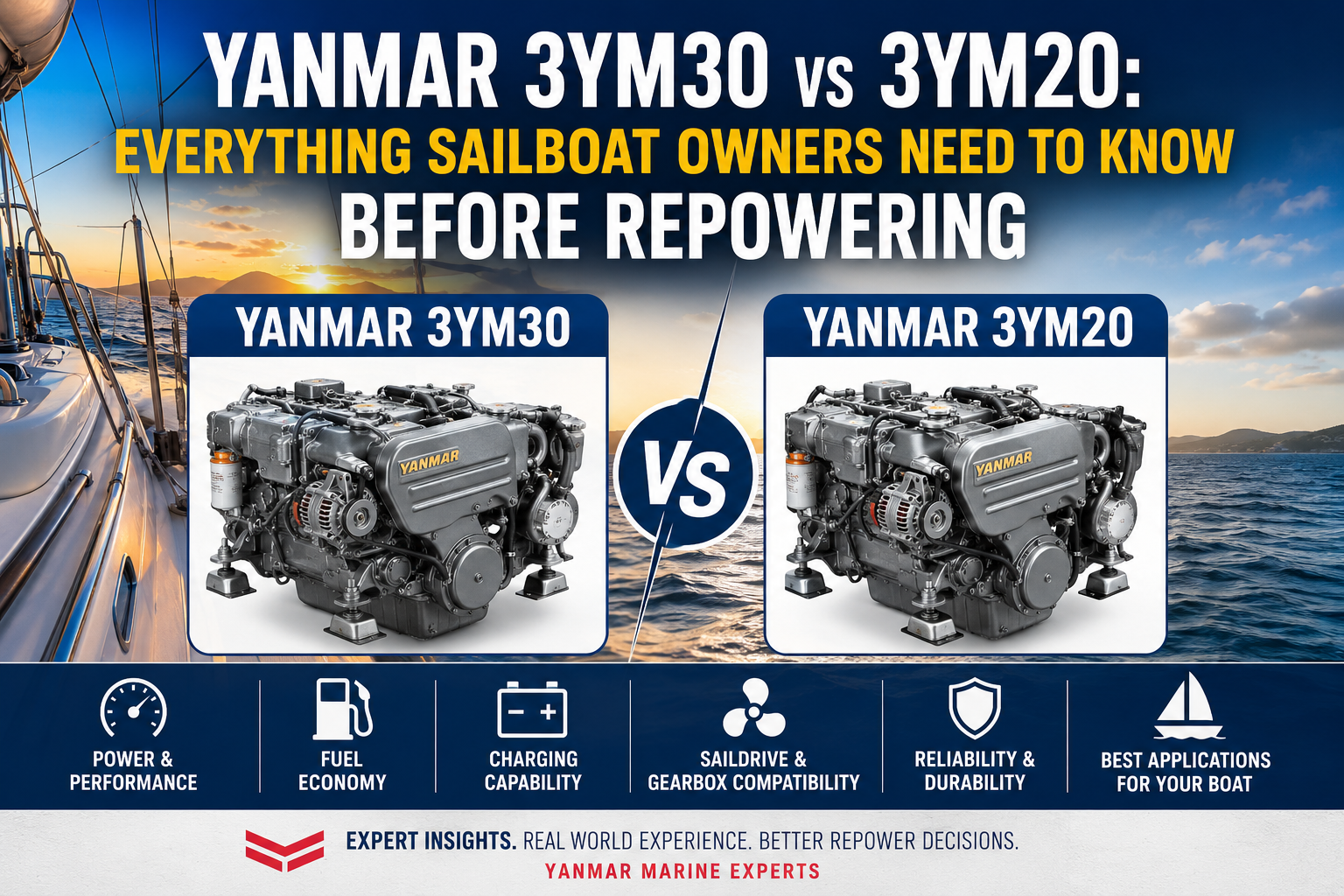
If you spend enough time around sailboat owners, you eventually hear the same question again and again:
“Should I get the Yanmar 3YM20… or spend more money on the 3YM30?”
And honestly?
It is a very smart question.
Because choosing a sailboat engine is not simply about horsepower.
It is about:
At Yanmar Marine Experts, we regularly help:
compare propulsion systems for real-world offshore use.
Over the years, we have assisted sailboat owners worldwide with:
across a wide range of cruising sailboats and catamarans.
One thing becomes obvious very quickly:
Choosing the correct sailboat engine affects far more than simple cruising speed.
And over the years, one thing becomes very clear:
The “better” engine depends entirely on:
We have seen improperly matched sailboat propulsion systems create problems including:
Many of those issues were caused by incorrect repower planning rather than engine quality itself.
Because some sailors prioritize:
Others prioritize:
This complete Yanmar 3YM30 vs 3YM20 guide explains everything sailboat owners need to know before repowering, including:
Many sailors researching Yanmar 3YM30 vs 3YM20 comparisons are usually planning:
This guide explains:
Most importantly, this comparison is written from real offshore propulsion experience — not generic brochure specifications copied from the internet. Which Engine Yanmar 3YM20 or 3YM30
There is a reason the Yanmar 3YM Series became one of the most trusted small Marine Diesel Engines in the sailboat world.
Actually…
there are several reasons.
The platform became popular because it delivers:
That combination matters enormously for sailboat owners.
Especially offshore cruisers.
One long-range sailor once told us:
“The best sailboat engine is the one you stop thinking about.”
Honestly?
That perfectly describes why so many offshore sailors trust Yanmar Marine Engines.
Because offshore, predictability matters.
Sailors researching offshore propulsion systems should also review:
for broader sailboat propulsion guidance.
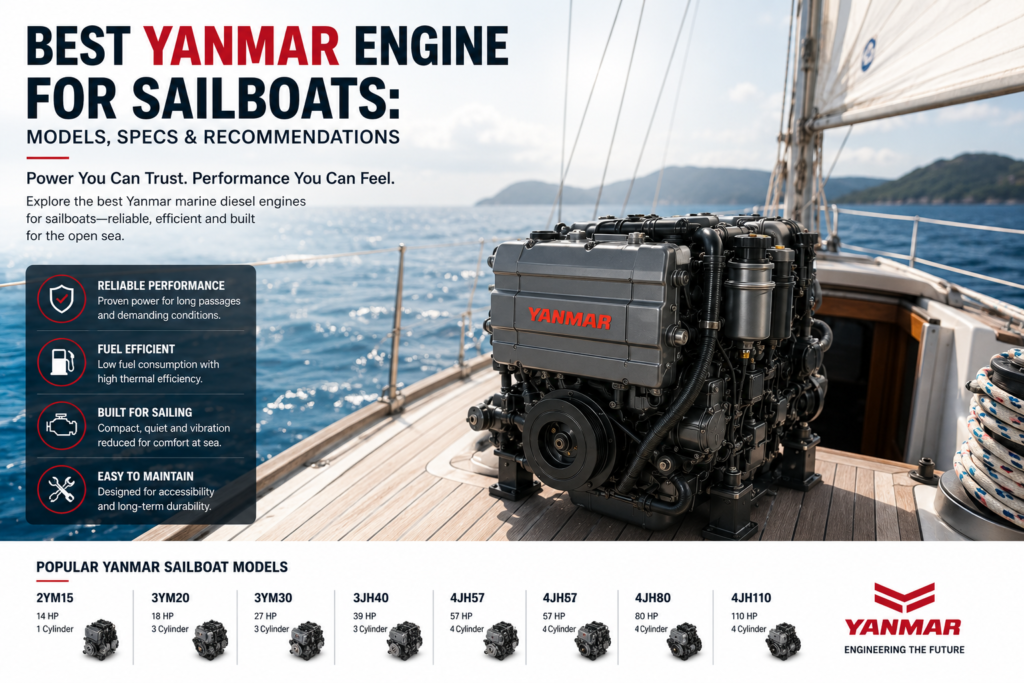
The Yanmar 3YM20 and Yanmar 3YM30 are commonly installed in:
They are especially popular in:
This is where things become interesting.
The Yanmar 3YM20 Marine Diesel Engine is generally viewed as:
The Yanmar 3YM30 Marine Diesel Engine is usually viewed as:
And that difference matters far more offshore than many first-time buyers realize.
This is where the Yanmar 3YM30 vs 3YM20 comparison becomes most important for sailboat owners planning offshore repower projects.
Because choosing the wrong sailboat diesel engine replacement can create:
The Yanmar 3YM20 Marine Diesel Engine became popular because it solves a very specific problem:
Many sailboats simply do not need large horsepower.
Especially:
The Yanmar 3YM20 is respected for:
Many sailors love the engine because it feels:
One coastal sailor once explained it perfectly:
“I wanted an engine that just quietly did its job.”
That describes the 3YM20 extremely well.
The engine works especially well in:
For sailors who:
the 3YM20 can be an excellent propulsion system.
This is where buyers need to be realistic.
The 3YM20 can sometimes feel underpowered when:
And offshore…
reserve power matters more than many sailors expect.
Especially during:
The Yanmar 3YM30 Marine Diesel Engine is one of the most respected small offshore cruising engines in the sailboat industry.
And honestly?
There is a reason experienced offshore sailors often prefer it.
The 3YM30 provides:
That extra power may not sound dramatic on paper…
but offshore, it feels very different.
One offshore cruising couple once upgraded from a smaller auxiliary engine to the Yanmar 3YM30 before crossing into rough offshore conditions.
Later they told us:
“We finally stopped worrying every time weather conditions changed.”
That sentence explains offshore reserve power perfectly. Lighter vs heavier diesel engine – Cruisers & Sailing Forums
The Yanmar 3YM30 works extremely well for:
It is especially popular among sailors carrying:
Buyers considering offshore cruising propulsion upgrades should also review:
before starting repower projects.
Let us be fair.
The 3YM30 is not automatically better for everyone.
It does involve:
For some smaller boats, the additional power may not even be necessary.
This is where the comparison becomes far more practical.
Because offshore, brochure specifications mean very little.
Real-world operation matters.
The most obvious difference is horsepower.
But offshore…
the difference feels larger than many buyers expect.
Especially under:
One of the biggest mistakes sailors make is assuming:
“If the smaller engine moves the boat, then it is enough.”
Not necessarily.
Offshore propulsion is not simply about movement.
It is about:
That is where the Yanmar 3YM30 Marine Diesel Engine often feels significantly stronger.
This is one of the most overlooked differences.
Torque matters enormously in sailboats.
Especially:
The Yanmar 3YM30 generally delivers:
Experienced offshore sailors understand that reserve power is not simply about comfort — it can become an important safety advantage during:
This becomes especially noticeable during offshore sailboat repower projects where owners upgrade from older underpowered auxiliary engines.
That becomes noticeable very quickly in:
Now here is where the 3YM20 shines.
The Yanmar 3YM20 Marine Diesel Engine is extremely fuel efficient.
Especially for:
For many sailors, that matters enormously.
Because fuel economy affects:
Absolutely.
The Yanmar 3YM30 remains a highly efficient marine diesel engine.
But naturally:
The difference is not extreme…
but it exists.
Sailors comparing ownership costs should also review:
before selecting propulsion systems.
This is one area many first-time buyers underestimate completely.
Modern sailboats consume much more electrical power than older boats.
Especially offshore cruisers running:
The Yanmar 3YM30 often becomes more attractive because of:
That matters enormously for long-range cruising.
One cruiser once explained:
“The engine became part of our electrical system.”
That is very true on modern offshore sailboats.
This is critical.
Because not every engine belongs in every boat.
The 3YM20 generally works best in:
The 3YM30 generally works better in:
This becomes especially important when:
This is one of the biggest reasons sailors compare these engines.
Repower projects.
Experienced sailboat repower specialists understand that replacing an auxiliary sailboat engine involves much more than swapping horsepower numbers.
Engine beds, shaft alignment, propeller sizing, saildrive compatibility, exhaust routing, and charging requirements all directly affect offshore reliability and long-term owner satisfaction.
Many repower customers choose the Yanmar 3YM30 Marine Diesel Engine because they want:
Especially older sailboats originally designed around smaller auxiliary engines.
The Yanmar 3YM20 still makes excellent sense for:
There is nothing “bad” about the 3YM20.
It simply depends on the vessel and offshore expectations.
Buyers planning repower projects should also review:
before finalizing propulsion layouts.
This is another area buyers often overlook.
And it matters enormously offshore.
The Yanmar 3YM Series commonly pairs with:
depending on:
Improper gearbox matching creates:
Professional propulsion matching becomes especially important when upgrading from older auxiliary sailboat engines to modern Yanmar propulsion systems.
Incorrect propeller pitch or gearbox ratios can dramatically reduce fuel efficiency and offshore performance.
Professional propulsion planning matters enormously here.
That is why experienced buyers carefully evaluate:
before finalizing repower projects.
Buyers researching drivetrain setup should also explore:
for deeper propulsion guidance.
We have seen sailors make the same mistakes repeatedly.
Some become expensive very quickly.
This is probably the most common mistake.
Especially in offshore cruising projects.
Modern offshore cruising consumes much more electrical power than many buyers realize.
Cheap propulsion decisions often become expensive offshore.
Especially long term.
An improperly matched propeller can ruin:
Both engines are respected for long operating life when maintained properly.
And honestly?
Maintenance matters more than many buyers realize.
Experienced offshore sailors regularly monitor:
Many serious offshore engine problems begin with neglected maintenance.
Many long-term offshore reliability problems actually begin with:
Preventive maintenance remains one of the biggest factors affecting sailboat diesel engine lifespan.
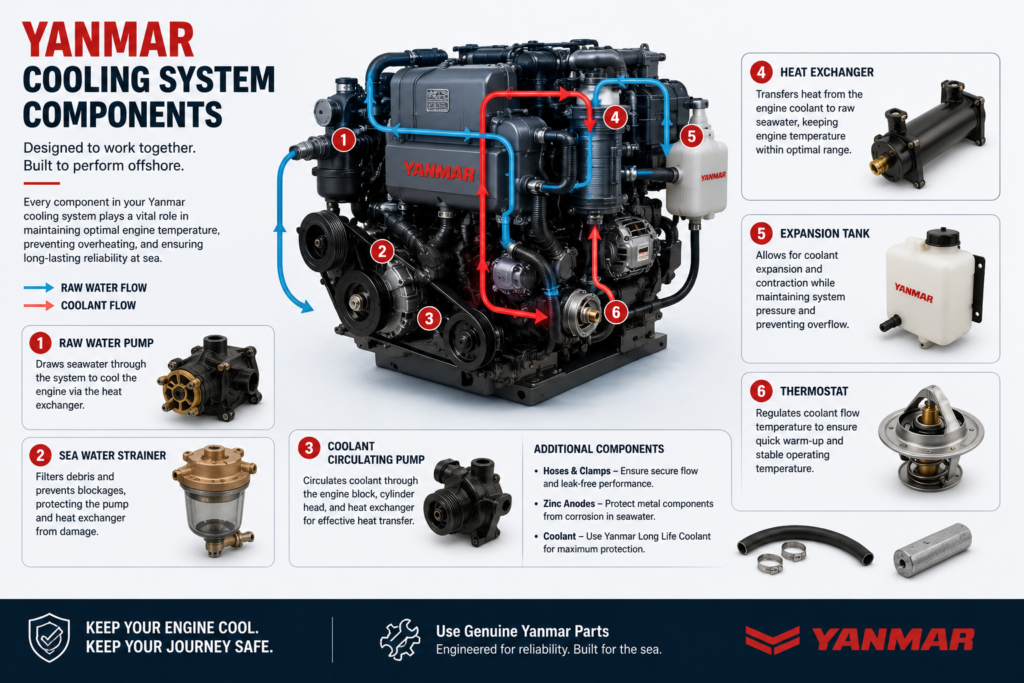
Experienced operators strongly prioritize genuine Yanmar Parts because:
Sailors focused on long-term offshore reliability should also review:
for deeper maintenance guidance.
This question comes up constantly.
And honestly?
Both options can make sense.
Used engines may work well for:
Always inspect:
Maintenance history matters enormously.
Experienced buyers also verify:
before purchasing used marine diesel engines.
This becomes especially important for imported engines or older offshore sailboat repower projects.
Buyers comparing ownership value should also explore:
before purchasing propulsion systems.
This is where real-world experience matters more than brochures.
We have seen:
We regularly speak with offshore cruisers who initially believed smaller engines were “good enough,” only to later upgrade because of:
That experience is one reason many long-range sailors eventually prefer the Yanmar 3YM30 for offshore cruising applications.
Neither choice is automatically wrong.
The correct decision depends on:
At Yanmar Marine Experts, we assist customers worldwide with:
We also assist customers sourcing complete Yanmar Engines for Sale for:
Because offshore, choosing the correct propulsion system matters far more than simply choosing the cheapest engine online.
For many offshore cruisers, yes. The extra torque, reserve power, and charging capability often improve offshore confidence significantly.
Yes — for many lighter sailboats and moderate offshore use. However, heavier cruising boats may benefit from additional reserve power.
The Yanmar 3YM20 Marine Diesel Engine generally consumes slightly less fuel.
Many offshore cruisers prefer the Yanmar 3YM30 because of improved reserve power and charging capability.
For heavier offshore cruising sailboats, many owners prefer the Yanmar 3YM30 because of stronger reserve power and charging capability. Smaller coastal sailboats may still perform extremely well with the Yanmar 3YM20.
In many repower projects, yes — but proper gearbox, propeller, and installation planning remain critical.
Properly maintained Yanmar Marine Engines can last thousands of operating hours.
Yes. The Yanmar 3YM Series is widely respected worldwide for:
Proper repower planning is critical. Engine matching, gearbox ratios, propeller sizing, charging requirements, cooling systems, and saildrive compatibility all directly affect offshore reliability and long-term owner satisfaction.
Yes. Yanmar Marine Experts assists customers worldwide with:
So…
Which engine is actually better?
Honestly?
Both are excellent offshore propulsion systems.
The Yanmar 3YM20 Marine Diesel Engine is excellent for:
The Yanmar 3YM30 Marine Diesel Engine is often better for:
For many sailboat owners, the decision is not whether the 3YM20 is a good engine — because it absolutely is.
The real question is whether the additional offshore confidence, reserve power, and charging capability of the Yanmar 3YM30 justify the higher repower cost for the intended cruising plans.
At Yanmar Marine Experts, we help customers worldwide evaluate sailboat propulsion systems based on:
We also assist with:
Because offshore, the best sailboat repower engine is not simply the engine with more horsepower.
It is the engine that matches:
You have not enough Humanizer words left. Upgrade your Surfer plan.

Comment (1)
[…] It is the engine you trust when conditions stop being comfortable. Also check out Yanmar 3YM30 vs 3YM20: Which Marine Diesel Engine Is Better? […]