
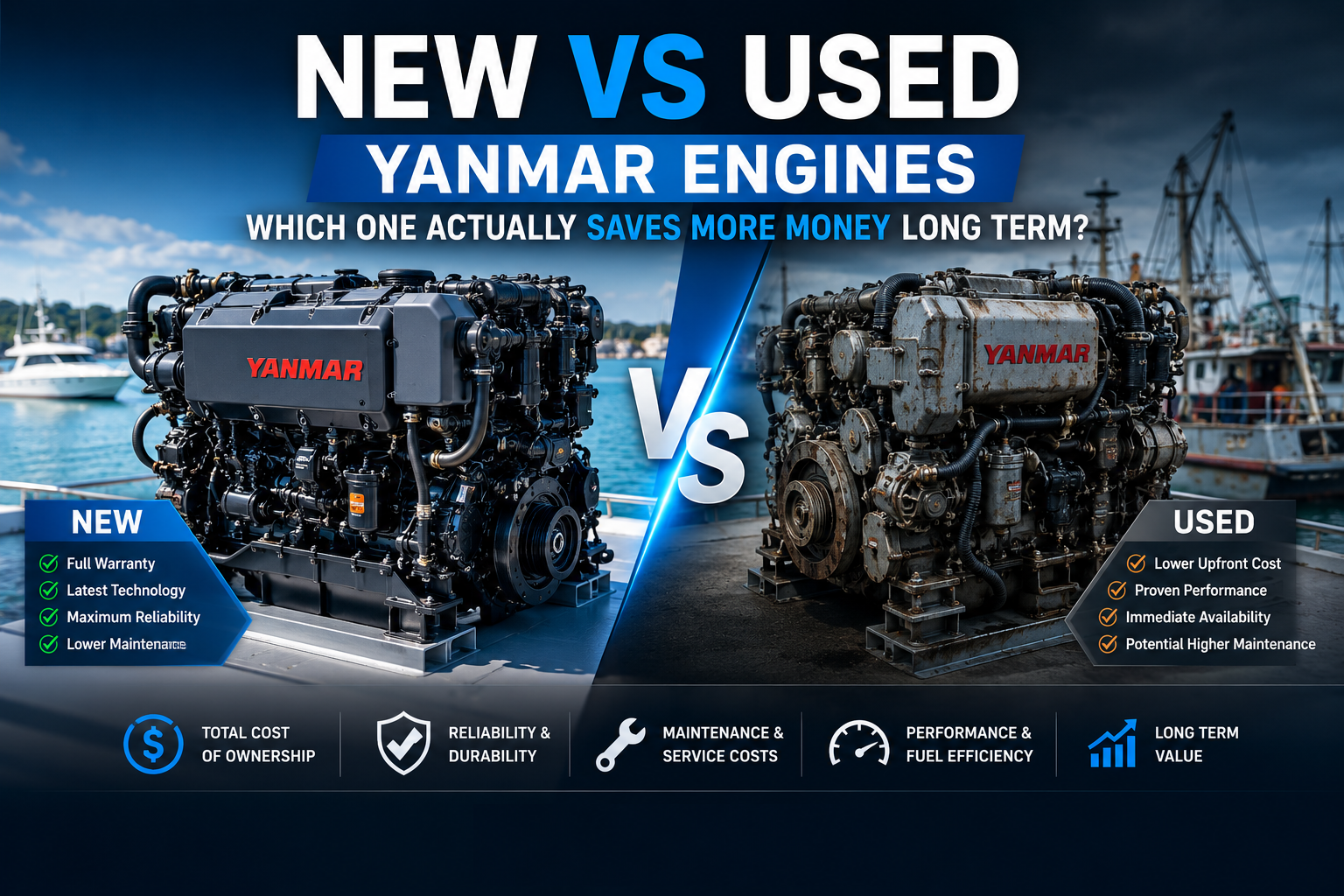
Buying a marine engine is not like buying a phone.
Or even buying a car.
A marine engine affects:
That is why one of the biggest questions boat owners ask us at Yanmar Marine Experts is:
“Should I buy a new Yanmar engine… or a used one?”
And honestly?
There is no single answer that fits everybody.
Because the right decision depends on:
At Yanmar Marine Experts, we regularly help customers worldwide compare new and used Yanmar propulsion systems for:
And after years of working with offshore operators, one thing becomes very clear:
The cheapest engine is not always the engine that saves the most money long term.
We have inspected:
That real-world experience is exactly why buying marine engines should never be based on price alone.
Sometimes a used engine becomes an incredible value.
Other times?
It becomes a floating repair bill.
Many buyers researching new vs used Yanmar engines are not simply looking for the lowest purchase price.
They want to understand:
This guide explains:
Most importantly, this article is written from practical marine propulsion experience — not generic automotive advice copied into the marine industry.
There is a reason yanmar diesel marine engines maintain strong resale value worldwide.
Operators trust them.
Simple as that.
Across:
Yanmar Marine Engines have built a reputation for:
One offshore captain once told us:
“A good Yanmar engine ages slower than most boats.”
Honestly?
That is not far from the truth.
We regularly see properly maintained Yanmar engines operating reliably after:
That reputation is exactly why both new and used Yanmar engines remain in high demand globally.
Most people assume the difference is simply:
new = expensive
used = cheaper
But offshore propulsion is not that simple.
The real comparison involves:
Because offshore, engine reliability is not just about convenience.
It affects:
Experienced Yanmar Marine Engine Dealers understand that long-term operating cost often matters far more than initial purchase price.
For offshore operators especially:
eventually affect ownership cost more than the original engine invoice.
The answer depends heavily on:
For some owners, a properly maintained used Yanmar engine becomes an excellent financial investment.
For others, buying new reduces long-term repair costs and operational risk significantly.
For many operators, buying a new engine reduces uncertainty dramatically.
And offshore, uncertainty matters.
One of the biggest advantages of new Yanmar Engines for Sale is warranty protection.
Many new Yanmar engines include:
That matters enormously for:
One major advantage of buying through an experienced Yanmar Marine Engine Dealer is proper:
This becomes especially important for:
One commercial operator once explained:
“I did not buy the new engine because I expected problems. I bought it because I wanted fewer surprises.”
That mindset is very common offshore.
Modern yanmar marine diesel engines continue improving in:
Especially with:
For operators running hundreds or thousands of hours annually, modern fuel-efficient yanmar marine diesel engines may save enormous amounts of money long term.
New engines reduce the likelihood of:
That peace of mind matters enormously offshore.
Modern engines generally have:
That becomes important during long-term ownership.
Now let us be fair.
Used Yanmar engines are not automatically bad.
In fact, some are excellent values.
Especially when:
This is the obvious advantage.
A used engine may cost dramatically less initially.
For some owners, that makes repowering financially possible when a new engine is outside the budget.
Sometimes owners have:
In those situations, a properly maintained used engine can make excellent financial sense.
Certain used engines are immediately available while some new engine packages may involve:
For urgent projects, used availability can matter.
This is where many buyers get into trouble.
A used marine engine may look clean externally…
while hiding serious internal problems.
And unfortunately, cosmetic appearance means almost nothing.
We once inspected a used offshore engine that looked nearly perfect externally.
Fresh paint.
Clean hoses.
Shiny covers.
But internally?
The cooling passages had severe saltwater restriction and injector problems.
That is why inspection matters so much.
Experienced offshore operators rarely purchase used marine diesel engines without:
This is one reason some used marine engines initially appear cheaper but eventually become more expensive long term.
Hour meters can sometimes:
Commercial engines especially may accumulate enormous operating hours quickly.
Saltwater exposure creates serious long-term risk.
Especially around:
One overheating event can create:
And many buyers never know it happened.
This may be the single biggest risk of all.
A well-maintained older engine is often far better than a neglected newer engine.
Maintenance history matters enormously.
Experienced buyers never purchase marine engines blindly.
Especially offshore propulsion systems.
Compression testing helps evaluate:
Always inspect:
Cooling problems offshore become extremely expensive.
Oil analysis can reveal:
This is incredibly valuable when evaluating used engines.
Modern diesel systems depend heavily on healthy injectors.
Poor injectors affect:
Experienced buyers always ask for:
Good records increase confidence dramatically.
One of the biggest mistakes buyers make is focusing only on age.
Age alone means very little.
We have seen:
One charter operator maintained his engines obsessively:
Those engines remained incredibly reliable long after many newer engines failed.
We have seen commercial operators extend engine lifespan dramatically simply through:
On the other hand, we have also seen newer engines fail early because maintenance was ignored.
A properly maintained used Yanmar engine often saves far more money long term than a neglected engine with fewer operating hours.
That is why maintenance history matters far more than appearance alone.
Operators evaluating engine lifespan should also review How Long Do Yanmar Marine Engines Last.
The Yanmar 3YM30AE Marine diesel engine 29 HP remains one of the most trusted sailboat propulsion systems because of its:
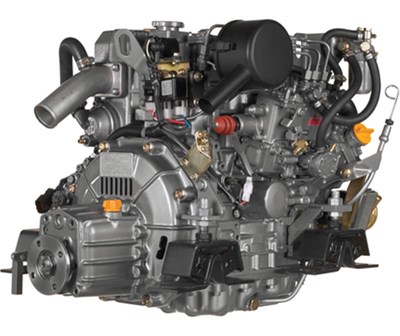
The 4JH Series is extremely popular among:
Owners appreciate:
Many sailboat buyers also review the Best Yanmar Engine for Sailboats guide before selecting propulsion systems.
Older:
remain popular because many were built extremely well mechanically.
But buyers should carefully inspect:
Especially on saltwater boats.
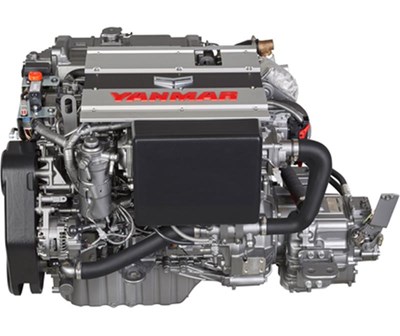
The 6LY Series remains one of the most respected offshore fishing propulsion platforms available.
Operators appreciate:
The modern 4LV Series continues growing in popularity for:
Operators appreciate:
Many offshore buyers also review the Best Yanmar Engine for Fishing Boats guide before repowering.
Commercial operators usually prioritize:
That is why many commercial fleets prefer:
for heavy offshore workloads.
Commercial operators researching offshore propulsion systems may also review the Best Yanmar Engine for Commercial Vessels guide.
Used engines often make sense for:
Not every vessel requires a brand-new engine.
Buyers planning propulsion upgrades should also review the Yanmar Engine Repower Guide before purchasing replacement engines.
New engines usually make more sense for:
Because downtime offshore eventually becomes far more expensive than initial purchase price.
Many buyers focus only on engines.
Experienced operators know:
the gearbox matters enormously too.
Improper gearbox matching may create:
Experienced propulsion specialists also understand that improperly matched gearboxes can:
That is why professional gearbox matching is a major part of serious repower planning.
That is why many operators carefully pair:
with propulsion systems correctly.
Operators researching propulsion balancing should also review the Yanmar Gearboxes Guide and the Yanmar Engine and Gearbox Matching Guide.
Experienced operators strongly prioritize genuine Yanmar Parts because:
Critical maintenance items include:
Many offshore reliability problems actually begin with neglected maintenance components such as:
Using genuine Yanmar Parts helps reduce compatibility problems and maintain long-term propulsion reliability.
For a deeper understanding of maintenance systems and preventive servicing, operators should review the complete Yanmar Parts Guide.
Cheap engines sometimes become the most expensive engines later.
This is extremely risky.
Poor drivetrain matching creates expensive offshore problems.
This mistake alone has cost buyers enormous amounts of money.
Professional Marine Diesel Diagnostics Support can help identify hidden cooling, injector, and drivetrain problems before purchase.
So…
new or used?
The truth is:
both can make sense.
A properly maintained used engine may provide excellent value.
A new engine may provide:
The smartest buyers do not focus only on purchase price.
They focus on:
Ultimately, choosing between new vs used Yanmar engines depends on balancing:
At Yanmar Marine Experts, we help customers worldwide compare new and used Yanmar propulsion systems based on:
We also assist with:
We also assist customers sourcing complete Yanmar Engines for Sale for:
Our Marine Engine Repower Services help offshore operators plan reliable propulsion upgrades correctly.
Because offshore, the best engine is not simply the cheapest engine.
It is the engine you trust when you are far from shore.

Comment (1)
[…] New vs Used Yanmar Engines […]