
If you spend enough time around serious boat owners, eventually you notice something interesting.
The people buying engines are usually not chasing horsepower anymore.
They are chasing:
And honestly?
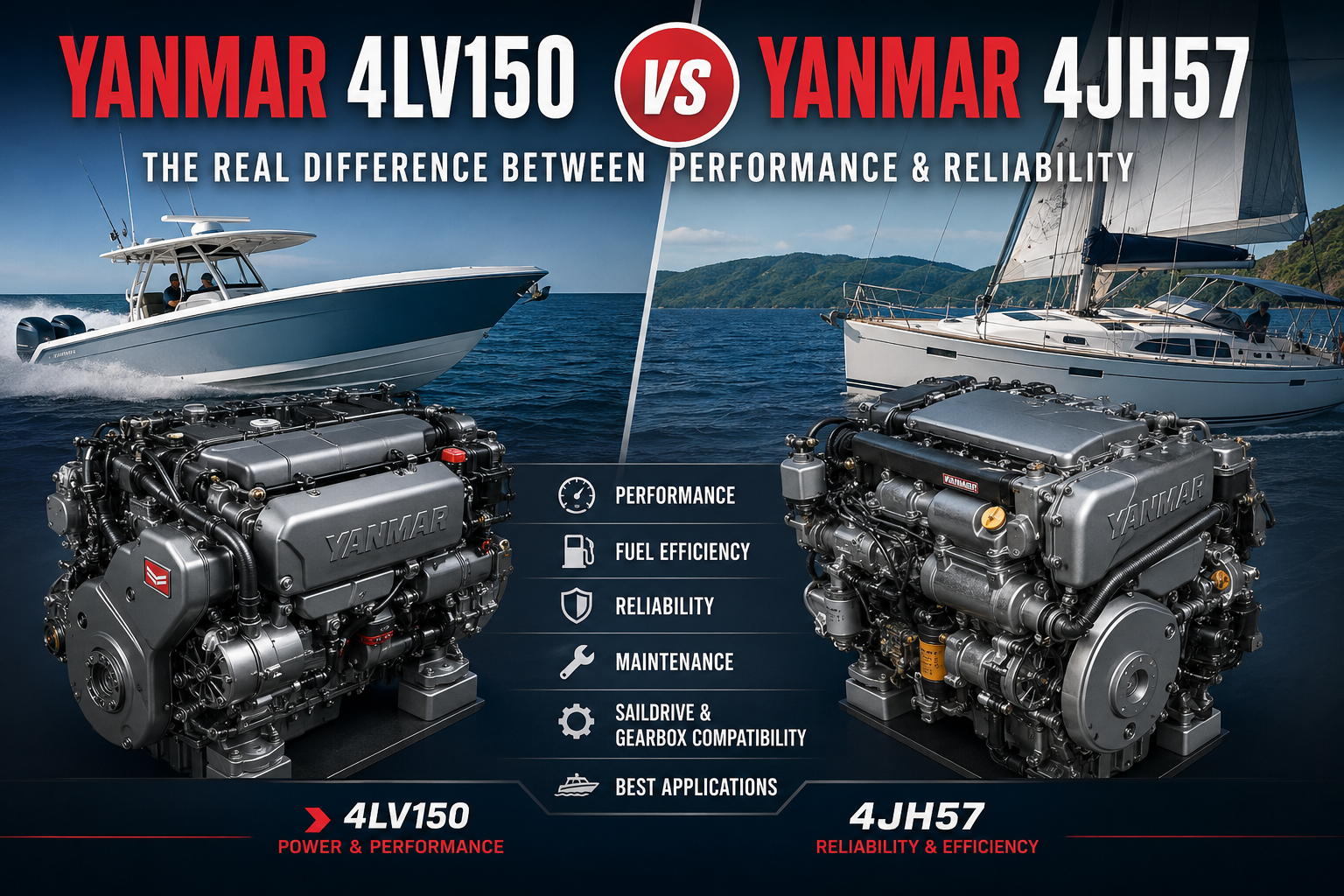
That is exactly why so many buyers compare the Yanmar 4LV150 vs 4JH57.
Because both engines are highly respected Yanmar Marine Diesel Engines used in:
But in real-world offshore operation?
They are completely different personalities.
One is:
The other is:
At Yanmar Marine Experts, we regularly help:
compare Yanmar Diesel Marine Engines based on actual offshore use not simply brochure numbers.
Over the years, we have assisted customers worldwide with offshore repowers, propulsion troubleshooting, saildrive matching, gearbox selection, and complete marine diesel engine replacement projects across sailboats, fishing boats, cruising yachts, and commercial vessels.
One thing becomes obvious very quickly: selecting the correct Yanmar Marine Diesel Engine affects far more than cruising speed alone.
And over the years, one thing becomes very obvious:
The wrong engine can make a great boat frustrating.
While the right Yanmar Marine Diesel Engine can completely transform offshore confidence.
We have seen:
We have also seen customers struggle with excessive fuel burn, poor propeller matching, drivetrain vibration, overheating under heavy offshore load, and charging system limitations simply because the propulsion setup was incorrectly matched to the boat’s operating style.
This complete Yanmar 4LV150 vs 4JH57 guide explains the real difference between performance and reliability for:
We will cover:
Most importantly, this comparison is written from real marine propulsion experience, not generic automotive advice copied into the boating world.
At first glance, the comparison almost seems strange.
Because these engines were designed with very different offshore priorities.
But buyers still compare them constantly.
Why?
Because both engines are:
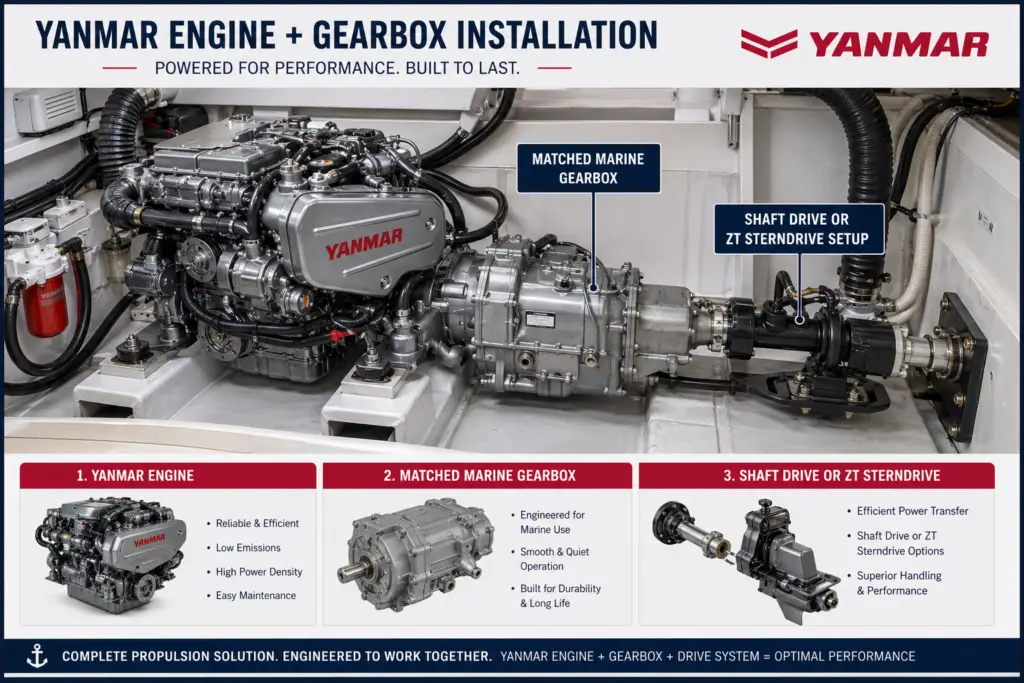
The biggest reason buyers research Yanmar 4LV150 vs 4JH57 comparisons is because both engines represent very different offshore propulsion philosophies.
The Yanmar 4LV150 Marine Diesel Engine feels like:
The Yanmar 4JH57 Marine Diesel Engine feels like:
That difference matters enormously offshore.
The Yanmar 4LV150 Marine Diesel Engine represents a newer generation of high-performance Yanmar Diesel Marine Engines designed for:
And honestly?
You feel it immediately.
The engine feels:
The 4LV platform was designed around:
This is one reason the engine became extremely popular in:
The engine delivers a much more “automotive-like” driving experience compared to older Yanmar Diesel Engines Marine platforms.
One customer once explained it perfectly:
“The 4LV feels like a modern luxury SUV engine… except offshore.”
Honestly?
That description is surprisingly accurate. Yanmar Diesel Sailboat Engines.
Owners love the Yanmar 4LV150 Marine Diesel Engine because of:
Especially in lightweight boats.
The engine performs exceptionally well in:
It is especially attractive for buyers wanting:
Now the Yanmar 4JH57 Marine Diesel Engine is a very different animal.
This engine became legendary for one major reason:
Offshore trust.
Not glamour.
Not top speed.
Trust.
The 4JH platform became one of the most respected Yanmar Marine Diesel Engines in offshore sailboats worldwide because it consistently delivered:
The Yanmar 4JH57 Marine Diesel Engine became extremely popular among:
Especially sailors who prioritize:
One offshore cruiser once told us:
“The 4JH57 is boring in the best possible way.”
And honestly?
That is exactly why sailors love it.
Because offshore…
predictability matters.
The engine works extremely well in:
It is especially popular in:
This is one reason the Yanmar 4JH Series became one of the most trusted Yanmar Engines Marine platforms worldwide.
This is where the comparison becomes truly interesting.
Because these engines behave very differently offshore.
And this is where the real difference between performance and reliability becomes obvious offshore.
The Yanmar 4LV150 Marine Diesel Engine feels:
The Yanmar 4JH57 Marine Diesel Engine feels:
The 4LV platform delivers:
Especially in:
The 4JH57 is not designed for aggressive speed.
It is designed for:
This is where buyer priorities matter enormously.
The 4LV150 feels more athletic.
The 4JH57 feels more relaxed and predictable.
Neither is wrong.
They simply target different offshore experiences.
Experienced offshore operators understand that:
often matter more than raw speed offshore.
Both engines use modern common rail technology.
But they use it differently.
The Yanmar 4LV150 Marine Diesel Engine fully embraces modern electronic propulsion.
You notice:
This engine feels modern.
Especially compared to older Marine Engine Yanmar platforms.
The Yanmar 4JH57 Marine Diesel Engine also uses common rail technology…
but the engine still feels much more “traditional” offshore.
Which many cruisers actually prefer.
Because long-range sailors often prioritize:
This is where things become interesting.
Because both engines are efficient…
but in different ways.
The Yanmar 4LV150 Marine Diesel Engine performs impressively in:
The engine rewards efficient cruising RPM very well.
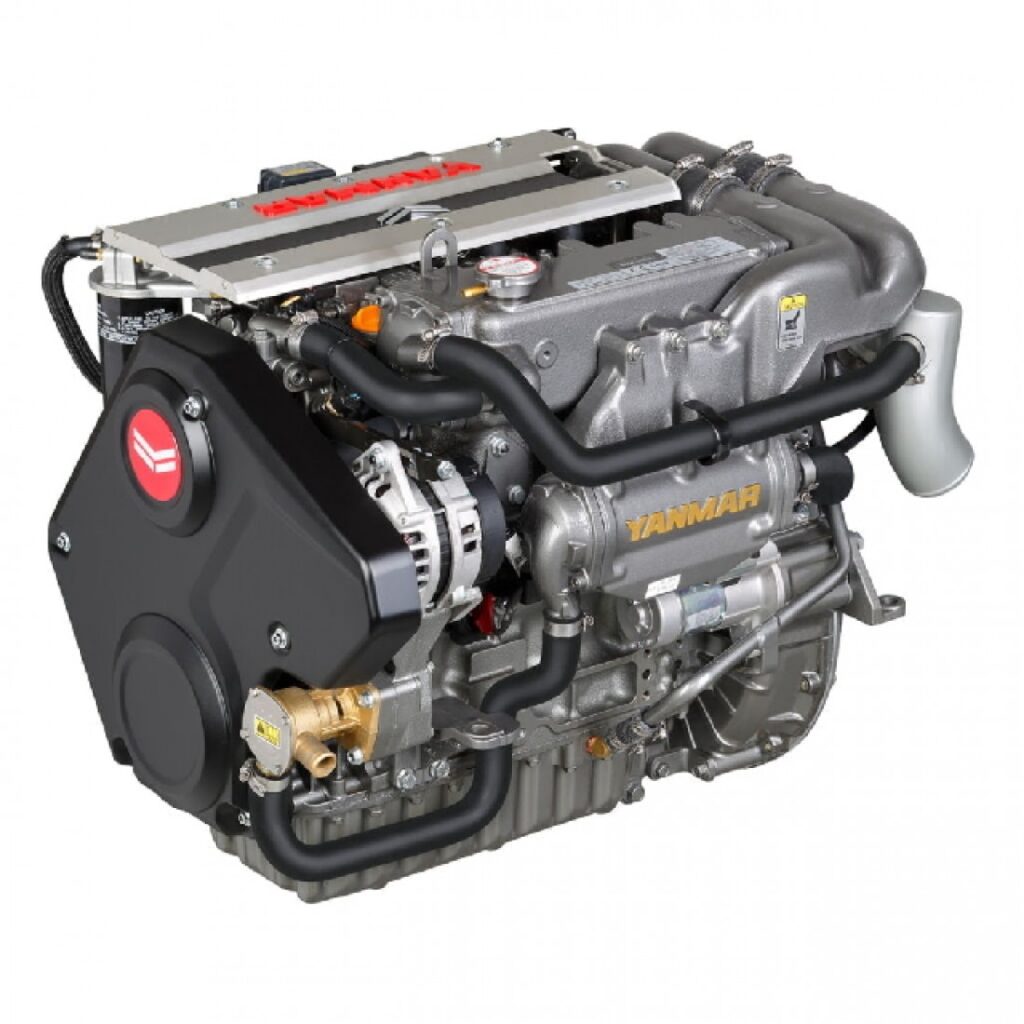
The Yanmar 4JH57 Marine Diesel Engine shines in:
For long-range offshore sailors, fuel economy becomes a major advantage over time.
One cruiser once explained:
“We stopped thinking about horsepower and started thinking about range.”
That mindset changes everything offshore.
This matters enormously during repower projects.
Especially in sailboats.
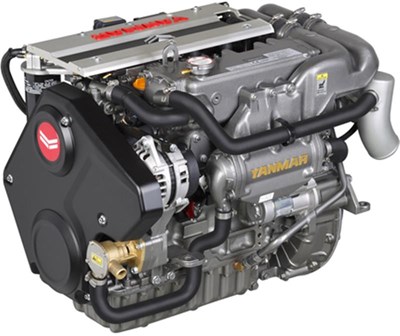
Experienced marine diesel repower specialists understand that replacing a Yanmar Marine Diesel Engine involves far more than installing a new engine block.
Engine beds, shaft alignment, exhaust routing, cooling systems, fuel delivery systems, propeller sizing, electrical integration, and gearbox ratios all directly affect offshore reliability and long-term propulsion performance.
Experienced repower specialists understand that marine engine replacement involves far more than simply swapping horsepower numbers.
We regularly help customers evaluate:
before finalizing propulsion upgrades.
Many repower problems actually begin with poor planning.
Not poor engines.
We regularly assist customers who initially selected propulsion systems based only on horsepower numbers, only to later realize the boat’s operating style required a completely different offshore propulsion setup.
The Yanmar 4LV150 Marine Diesel Engine often requires:
Especially in older boats.
The Yanmar 4JH57 Marine Diesel Engine is usually more straightforward for:
Especially because the engine was heavily designed around offshore cruising applications.
Honestly?
For most sailboats…
the Yanmar 4JH57 Marine Diesel Engine wins very easily.
And there is a reason for that.
The engine delivers:
That combination matters enormously offshore.
Especially during:
For most traditional sailboat repower projects, offshore reliability and fuel efficiency usually matter more than aggressive acceleration.
This is one reason the Yanmar 4JH Series has become so respected worldwide among offshore sailors seeking dependable Yanmar Marine Diesel Engines.
Yes.
But usually only in:
For most traditional sailboats, the 4JH57 simply makes more practical offshore sense.
Now this is where things flip dramatically.
Because the Yanmar 4LV150 Marine Diesel Engine becomes extremely attractive in powerboat applications.
The engine delivers:
Especially for:
For performance-oriented powerboat owners, throttle response and acceleration become much more important.
Many buyers moving from gasoline outboards or sterndrives immediately notice how refined the engine feels.
The Yanmar 4LV150 Marine Diesel Engine is especially attractive for buyers searching for modern Yanmar Boat Engines with:
Yes…
but usually in:
The 4JH57 prioritizes cruising efficiency over sporty performance.
This part matters more than many buyers realize.
Improper drivetrain matching creates:
The Yanmar 4JH57 Marine Diesel Engine commonly pairs with:
This is one reason the engine became extremely popular among offshore cruisers.
Properly matched Yanmar Gearboxes dramatically improve:
The Yanmar 4LV150 Marine Diesel Engine often integrates extremely well with:
Especially in:
Buyers researching drivetrain setup should also review:
before finalizing propulsion layouts.
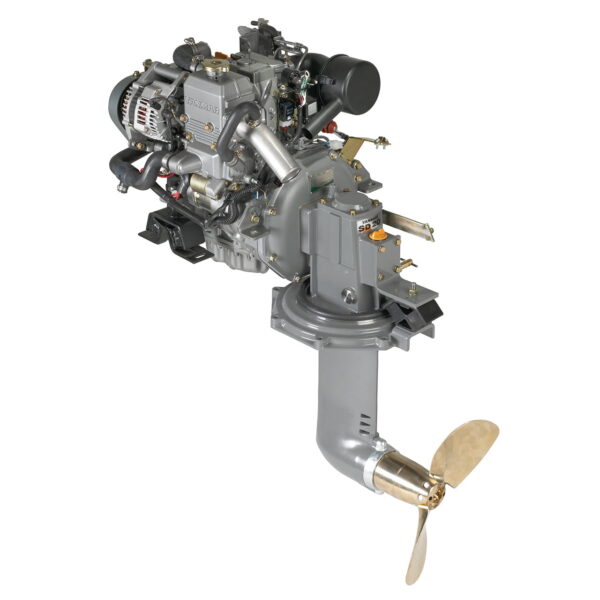
Both engines are respected for long operating life when properly maintained.
But ownership style matters.
The 4LV platform rewards:
Owners who maintain the engine properly usually love it.
The Yanmar 4JH57 Marine Diesel Engine became famous for its performance in offshore operations.
Especially for:
Many offshore sailors prioritize the engine because:
Experienced operators strongly prioritize genuine Yanmar Parts because:
Modern common rail Yanmar Diesel Marine Engines also require proper diagnostic support, fuel system maintenance, and preventive servicing to maintain long-term offshore reliability.
Neglected cooling systems, contaminated fuel, restricted heat exchangers, injector problems, and improper maintenance intervals remain some of the most common causes of offshore propulsion issues.
Many serious offshore engine problems begin with:
This question comes up constantly.
And honestly?
Both engines can be excellent used purchases…
if properly inspected.
Always inspect:
Especially with modern common rail Yanmar Diesel Marine Engines.
Experienced buyers also verify:
before purchasing offshore propulsion systems.
Experienced buyers also verify serial numbers, maintenance records, engine operating history, cooling system condition, electronic diagnostics reports, and corrosion exposure before purchasing used Yanmar Marine Diesel Engines.
This becomes especially important during offshore repower projects involving imported engines or unknown service history. Yanmar replaces its 150 to 250 HP marine engines.
This is where the differences become most obvious.
We regularly speak with:
using both platforms.
And honestly?
The feedback is surprisingly consistent.
The Yanmar 4LV150 Marine Diesel Engine impresses buyers wanting:
The Yanmar 4JH57 Marine Diesel Engine impresses buyers wanting:
We regularly speak with offshore cruisers who initially prioritized horsepower alone, only to later realize that fuel efficiency, charging capability, drivetrain balance, and offshore reliability mattered far more during long-distance operation.
That experience is one reason why propulsion matching remains critically important when comparing Yanmar 4LV150 vs 4JH57 offshore applications.
Neither engine is “better” universally.
The correct choice depends entirely on:
At Yanmar Marine Experts, we assist customers worldwide with:
At Yanmar Marine Experts, we also assist customers worldwide with:
We also assist customers sourcing complete Yanmar Engines for Sale for:
Because offshore, choosing the correct propulsion system matters far more than simply choosing the highest horsepower number online.
Yes. The Yanmar 4LV150 Marine Diesel Engine generally delivers stronger acceleration and a more performance-oriented driving experience.
For traditional offshore cruising and sailboat applications, many operators prefer the Yanmar 4JH57 Marine Diesel Engine because of its:
The answer depends heavily on the hull type and cruising style. The 4JH57 excels in displacement cruising efficiency, while the 4LV150 performs very efficiently in lightweight faster hulls.
The Yanmar 4LV150 Marine Diesel Engine generally feels smoother and quieter because of its more modern electronic refinement.
For most sailboats, the Yanmar 4JH57 Marine Diesel Engine is usually the better offshore propulsion choice.
The Yanmar 4LV150 Marine Diesel Engine is extremely attractive for offshore fishing and performance powerboat applications.
Yes. Both engines use modern common rail diesel technology.
Properly maintained Yanmar Marine Diesel Engines can last thousands of offshore operating hours.
Proper propulsion matching is critical offshore. Engine horsepower, gearbox ratios, propeller sizing, shaft alignment, saildrive compatibility, and vessel operating style all directly affect fuel economy, offshore handling, vibration levels, and long-term reliability.
Yes. Yanmar Marine Experts assists customers worldwide with:
So…
Which engine is actually better?
Honestly?
That depends entirely on the type of boating you do.
The Yanmar 4LV150 Marine Diesel Engine is excellent for:
The Yanmar 4JH57 Marine Diesel Engine is excellent for:
The Yanmar 4LV150 vs 4JH57 decision ultimately comes down to one core question:
Do you prioritize:
Both engines represent highly capable Yanmar Marine Diesel Engines, but they serve very different offshore propulsion priorities.
At Yanmar Marine Experts, we help customers worldwide evaluate:
Because offshore, the best engine is not simply the fastest engine.
It is the engine that gives you confidence when conditions stop being comfortable.
